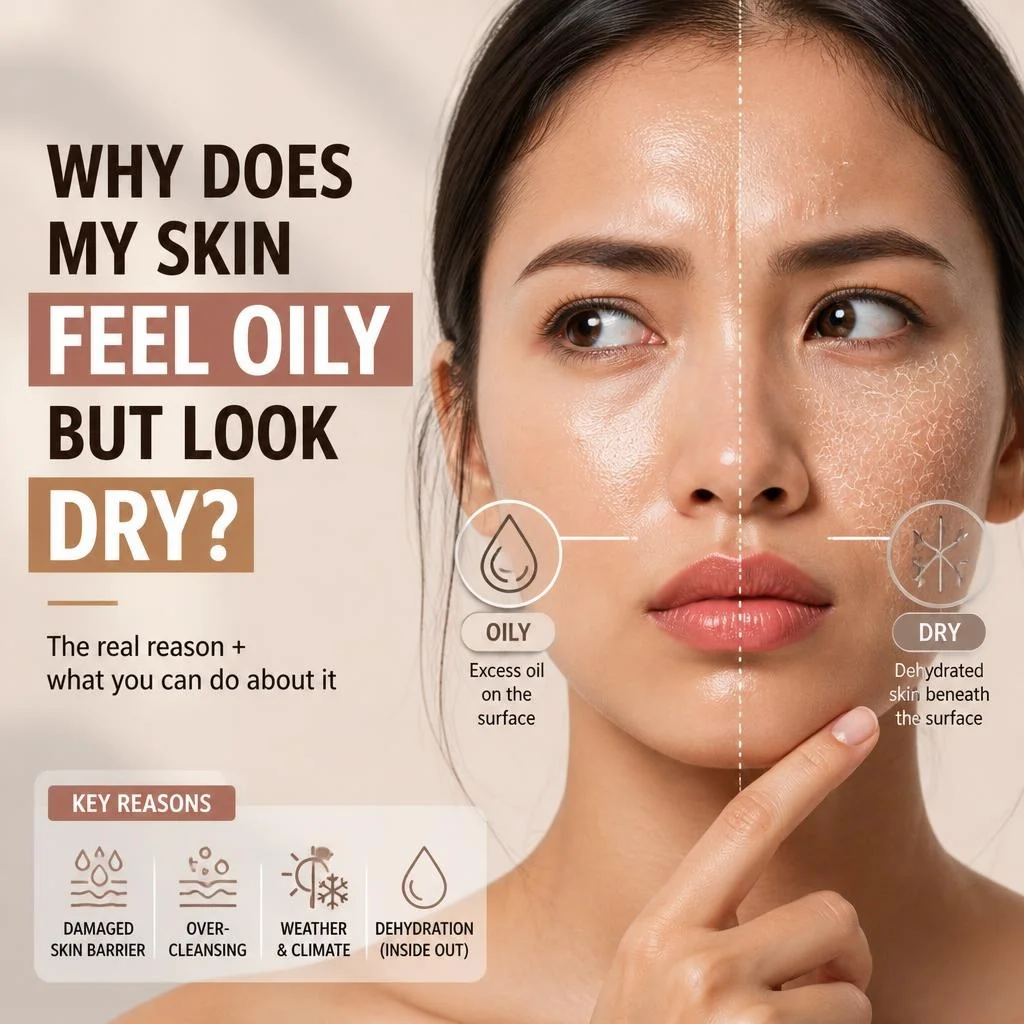
Your skin can feel greasy or shiny while still looking dull, tight, or flaky. This happens because oil (sebum) and water are separate. Sebum sits on the surface and makes skin look oily. Water content inside the skin determines whether it feels comfortable and plump. When water levels drop, the skin often responds by producing more oil as a protective response. The result is surface shine sitting on top of dehydrated, uncomfortable skin.
Table of Contents
Why does my skin feel oily
This is commonly called dehydrated oily skin. It is not a contradiction. Oiliness is largely a skin type driven by genetics and sebaceous gland activity. Dehydration is a temporary state that can affect any skin type, including oily or combination skin. When the skin barrier (the outer layer that holds moisture in) is disrupted, water escapes more easily. The glands then ramp up sebum to try to slow that loss, creating the oily-yet-dry feeling.
A realistic example: someone washes their face in the morning and it feels tight and slightly rough within minutes. By midday the T-zone looks shiny and makeup starts to slide, yet the cheeks still feel dry or show fine flaking. They reach for a stronger cleanser or skip moisturizer thinking it will help control the oil, but the tightness returns the next day.
Common triggers that tip skin into this state include over-cleansing with foaming or harsh products, frequent use of strong acids or alcohol-based toners, skipping moisturizer because the skin already feels greasy, dry indoor air from heating or air conditioning, and cold weather that increases water loss. These habits weaken the barrier, so the cycle continues.
Original insight: the instinct to fight oil with more stripping products is the most common reason this problem sticks around. Removing surface oil does not restore water. It often removes the few remaining protective lipids as well, prompting even more compensatory sebum. The useful shift is to treat the water deficit and support the barrier first. Once the skin holds moisture better, the excess oil signal often calms down on its own.
Practical steps that help most people:
- Switch to a gentle, non-foaming cleanser that does not leave skin feeling squeaky.
- Apply a lightweight hydrating serum with ingredients such as glycerin or hyaluronic acid while skin is still damp.
- Follow with a non-comedogenic moisturizer that includes ceramides or similar barrier-supporting lipids. Even oily skin needs this layer.
- Avoid stacking multiple drying actives at once.
- Protect skin from extreme dry environments when possible.
Related reading that pairs well includes guidance on seborrheic dermatitis (which can sometimes overlap with these symptoms) and basic barrier-repair routines for combination skin.
Frequently Asked Questions
Can oily skin really be dehydrated?
Yes. Oil production and water content operate independently. Plenty of surface sebum does not mean the deeper layers have enough water.
Does dehydrated skin produce more oil?
Often yes. When the barrier is compromised and water escapes, the skin may increase sebum as a temporary protective measure. Restoring hydration usually reduces this response.
Should I stop using moisturizer if my skin feels oily?
No. Skipping moisturizer is one of the main reasons the cycle continues. Choose a lightweight, non-comedogenic formula designed for combination or oily skin.
How long does it take to improve?
Many people notice less tightness and more comfortable skin within one to two weeks of consistent gentle hydration and barrier support. Full balance can take longer if the barrier was significantly disrupted.
Is this the same as dry skin?
No. Dry skin produces less oil overall. Dehydrated oily skin produces oil but lacks water. The care approach focuses more on hydration and barrier repair than on heavy occlusive creams.
When should I see a dermatologist?
If the combination of oiliness, flaking, and discomfort persists despite gentler care, or if you also have significant redness, itching, or breakouts, a professional can rule out conditions such as seborrheic dermatitis or barrier damage that need targeted treatment.
Treating the water deficit rather than just the surface oil breaks the cycle for most people. Once the barrier holds moisture better, the skin usually feels more comfortable and the excess shine becomes less of a daily battle.
Written by: Dr. Lena Hartman, Board-Certified Dermatologist
Reviewed/Updated: November 9, 2026