Lips are not naturally the same colour in everyone. Their colour is influenced partly by melanin — the pigment that also contributes to skin colour — and normal lip pigmentation can range widely between individuals. In people with naturally darker skin tones, brown or darker pigmentation of the lips and other areas of the mouth can be entirely normal.
The more useful question is often not simply “Are my lips dark?” but “Have my lips changed from their usual colour?”
New or increasing darkening can develop for several reasons. Sun exposure, smoking, irritation from cosmetics or toothpaste, inflammation, certain medicines and, less commonly, medical conditions can all affect pigmentation. A single new dark spot deserves a different kind of attention from lips that have always been evenly dark.
Table of Contents
Why lips can become darker
A helpful way to understand lip pigmentation is to look at pattern, timing and symptoms rather than colour alone. Clinicians evaluating pigmented areas of the lips and mouth consider whether pigmentation is longstanding or new, diffuse or confined to one spot, stable or changing, and whether there is inflammation, pain, scaling or another medical symptom.
Natural melanin and skin tone. Some people simply have more visible pigment in their lips. Physiological oral pigmentation is caused by normal melanin production and can involve the lips as well as other areas of the mouth. This is not a disease and does not need to be “bleached” or corrected.
This distinction matters because products marketed to make every pair of lips uniformly pink create an unrealistic expectation. A treatment may help pigmentation caused by irritation or another acquired trigger, but it cannot safely promise to turn genetically darker lips into a naturally pale colour.
Sun exposure. The lips are exposed to ultraviolet radiation just like the rest of the face. Dermatologists recommend protecting them with an SPF 30 or higher lip product, partly because the lips can develop sun damage and skin cancer. Sun exposure can also contribute to pigment changes in exposed skin and may make existing pigmentation more noticeable.
A darker patch on the lip is not automatically sun damage, however. Persistent or changing spots need assessment rather than guesswork because benign melanotic macules and, rarely, melanoma can also appear as pigmented lip lesions.
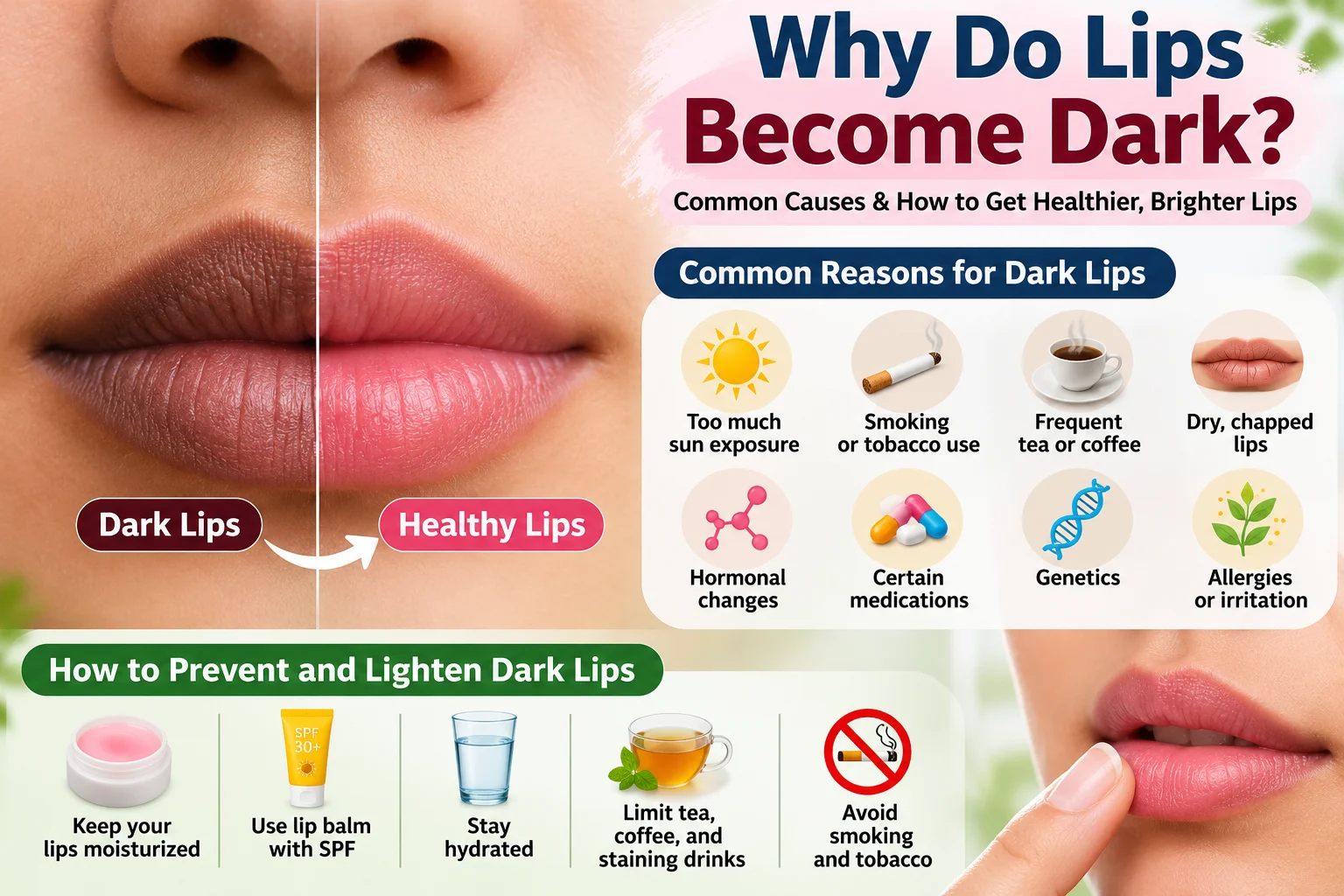
Smoking. Research has found an association between tobacco smoking and increased melanin pigmentation in the lips and other parts of the mouth, a phenomenon often described as smoker’s melanosis. Not every smoker develops it, and smoking is not the explanation for every case of dark lips.
Stopping smoking is worthwhile for reasons that go far beyond appearance. Tobacco is also associated with serious oral and general health risks, including oral cancer. Some smoking-related pigmentation may lessen after exposure is reduced or stopped, but the degree and speed of fading vary.
Lip irritation and contact dermatitis. Lipstick, lip balm, gloss, toothpaste, mouthwash, fragrances, flavourings and other products can trigger irritant or allergic contact cheilitis. Typical clues include dryness, burning, itching, scaling or cracking. In some people, inflammation is followed by brown or black pigmentation known as pigmented contact cheilitis.
This means a product advertised for “brightening” lips can sometimes have the opposite effect. If it repeatedly stings, burns or leaves the lips flaky, continuing to use it may keep the inflammatory cycle going. The American Academy of Dermatology specifically advises stopping lip products that cause burning, stinging or discomfort.
Post-inflammatory pigmentation. Skin and mucosal tissue may remain darker after inflammation or injury has settled. This is known as post-inflammatory hyperpigmentation and tends to be more noticeable and persistent in darker skin tones. Lip licking, picking, dermatitis and some phototoxic reactions can all create inflammation that may leave pigment behind.
For example, imagine a person who starts using a strongly flavoured lip-plumping product. Their lips begin to sting and peel, but they continue applying it because they assume the tingling means it is working. Several weeks later the irritation improves, yet the lip border looks darker than before. This is only an illustrative example, not a real patient, but it shows why identifying and stopping irritation can matter more than adding another “lightening” product. Contact cheilitis and post-inflammatory pigmentation can follow this general pattern.
Medicines. Some medicines can cause pigmentation of the skin or oral tissues, and fixed drug eruptions can repeatedly affect the same area — including the lips — before leaving residual dark pigmentation. Medicines associated with pigmentation include some antimalarials, tetracyclines such as minocycline, certain cancer treatments and other drugs, although the appearance and location vary considerably.
Do not stop a prescribed medicine because you suspect it is changing your lip colour. A doctor or pharmacist can review the timing, dose and other possible causes and decide whether any change in treatment is appropriate.
Less common medical causes. Generalised or unusual oral pigmentation can occasionally be associated with conditions such as Addison’s disease, which may cause darkening of the skin and mucous membranes. Other uncommon causes of oral pigmentation include Peutz-Jeghers syndrome and Laugier-Hunziker syndrome. These conditions usually have additional features, so lip colour alone is not enough to diagnose them.
How to tell natural lip colour from a new problem
One of the most useful distinctions is baseline colour versus acquired change. If both lips have been evenly brown since childhood or adolescence and the colour has remained stable, normal physiological pigmentation is more likely than if a new, isolated patch appeared recently. This is a practical inference from the way clinicians assess oral pigmentation using duration, distribution, appearance and medical history.
A change deserves more attention when it is:
- new or becoming noticeably darker;
- limited to one spot rather than evenly distributed;
- growing or changing in shape or colour;
- associated with bleeding, ulceration, persistent scaling, pain or a sore that does not heal;
- accompanied by pigmentation elsewhere in the mouth or unexpected symptoms such as persistent fatigue, weight loss or dizziness.
None of these signs automatically means cancer or a serious disease. They simply make self-diagnosis less appropriate.
A single flat brown spot can, for example, be a benign labial melanotic macule. But because pigmented lesions can overlap visually, dermatologists may examine suspicious lesions more closely and sometimes recommend biopsy when features are atypical.
Safe care for dark or easily irritated lips
If your lips have always been naturally darker and are otherwise healthy, treatment is not medically necessary. If the colour has changed, the safest approach is to look for a trigger rather than immediately trying to remove pigment.
Start with sun protection. Use a non-irritating lip balm with broad-spectrum SPF 30 or higher when outdoors and reapply according to the product instructions; the AAD advises reapplying lip sun protection about every two hours while outside.
Keep the rest of the routine simple. Fragrance-free, non-irritating moisturising products are preferable when lips are dry or inflamed. Petrolatum and similar occlusive ingredients can help reduce water loss, while lip licking, biting and picking can prolong irritation.
If darkening began soon after a new lipstick, lip balm, toothpaste or mouth product, stop the suspected irritant and allow the area to settle. Persistent or recurrent cases may require dermatologist-led patch testing to identify an allergy.
If you smoke, stopping removes a recognised contributor to oral pigmentation while also reducing much more serious tobacco-related health risks.
The key insight is that pigment often follows the cause rather than being the primary problem. When irritation is driving pigmentation, repeatedly scrubbing or bleaching the lips attacks the visible colour while leaving — or worsening — the process that created it.
Pigmentation can also take time to fade after inflammation stops. DermNet notes that pigmentation from pigmented contact cheilitis may fade slowly and may not disappear completely. That is one reason quick “pink lips in three days” claims should be treated sceptically.
What not to use on dark lips
Lemon juice is a poor choice for attempting to lighten lips. Citrus contains compounds that can cause phototoxic reactions when they contact skin and are followed by sunlight. Such reactions may produce redness or blistering and can leave post-inflammatory hyperpigmentation — exactly the outcome someone trying to lighten their lips wants to avoid.
Avoid aggressive scrubbing for the same reason. Persistent mechanical irritation can damage already sensitive lips, while picking and biting interfere with healing.
Be cautious with home bleaching mixtures and unregulated “whitening” creams. The AAD warns that some skin-lightening products have been found to contain undeclared steroids or mercury, and it advises never applying household liquid bleach to skin. Products designed for facial hyperpigmentation are also not automatically appropriate for the lip vermilion or inner lip.
Ingredients such as hydroquinone, retinoids or acids have legitimate dermatological uses in selected skin conditions, but that does not make unsupervised application to the lips safe or appropriate. If pigmentation is bothersome enough that you are considering prescription-strength lightening treatment or a procedure, a dermatologist should first establish what is causing the colour change.
When dark lips should be checked by a doctor
Most stable, symmetrical lip pigmentation is not an emergency. A new or changing pigmented spot, however, should not simply be covered with lipstick or treated with bleaching products.
The American Academy of Dermatology advises medical assessment of spots or growths that change, grow, bleed or itch, as well as sores that fail to heal. Dark colour changes on the lips or inside the mouth can occasionally represent skin cancer, including melanoma.
Book an appointment with a GP, dermatologist, dentist or oral-medicine specialist if you notice a new dark spot that persists, a patch with an irregular border or several colours, enlargement over time, bleeding, ulceration, recurrent crusting or a sore that does not heal.
You should also seek medical advice when pigmentation appears alongside broader symptoms such as unexplained weight loss, marked tiredness, dizziness or widespread skin darkening. Addison’s disease is uncommon, but pigmentation can occur together with systemic symptoms rather than as an isolated cosmetic change.
For unexplained persistent pigmentation, a clinician may review your medicines, smoking history, cosmetic and dental products, sun exposure and the timing of the colour change. Depending on the appearance, investigation may include patch testing for contact allergy or, for a suspicious focal lesion, biopsy.
Frequently asked questions
Can naturally dark lips become pink permanently?
Not reliably. Natural lip colour is influenced by melanin and genetics, and healthy lips do not all have the same colour. Treatments should aim to correct an acquired cause of excess pigmentation, not promise to change someone’s normal genetic lip colour permanently.
Can sun exposure make lips darker?
Sun exposure can contribute to pigment changes and sun damage, which is why dermatologists recommend SPF 30 or higher protection on the lips. A new isolated dark spot should still be examined rather than automatically blamed on the sun.
Does smoking cause dark lips?
Smoking is associated with increased oral and lip pigmentation in observational studies, although not every smoker develops dark lips. Tobacco exposure can stimulate pigmentation known as smoker’s melanosis and carries much more important health risks than pigmentation alone.
Can lipstick or lip balm darken the lips?
Sometimes. Ingredients in lip cosmetics and oral-care products can trigger irritant or allergic contact cheilitis. Inflammation may then leave lingering pigmentation, particularly in people prone to post-inflammatory hyperpigmentation.
Is lemon safe for lightening dark lips?
No good medical evidence supports using lemon juice as a safe lip-lightening treatment. Citrus can irritate skin and can trigger a phototoxic reaction when followed by sunlight, potentially leaving darker pigmentation after the inflammation resolves.
How long does dark lip pigmentation take to fade?
There is no single timeframe because it depends on the cause and the depth of pigment. Pigmentation after inflammation can fade gradually, while natural pigmentation will not simply disappear. Pigmented contact cheilitis may take many months to lighten and may not clear completely even after the trigger is removed.
Conclusion, internal links and author information
Dark lips are often simply part of a person’s natural colouring. When lips become darker than they used to be, common explanations include sun exposure, smoking, irritation, contact dermatitis and pigmentation left behind after inflammation. Medicines and systemic illnesses are less common possibilities.
The safest response is not aggressive bleaching. Protect the lips from sunlight, stop irritating products, avoid licking and picking, and address recognised triggers such as smoking. If the pigmentation is new, focal, changing, bleeding or associated with a non-healing sore or other unexplained symptoms, arrange a professional assessment.
This article provides general health information and is not a substitute for diagnosis or individual medical advice from a qualified healthcare professional.