
Introduction
Throughout history, salt has played a vital role in human civilization, functioning not only as a culinary staple but also as a preservative and a component in various traditional health practices. While table salt and Himalayan pink salt are widely recognized, Celtic sea salt remains relatively obscure despite its notable qualities. Sourced from the coastal regions of Brittany, France, Celtic sea salt is esteemed for its purity and impressive mineral content.
This guide offers an in-depth examination of Celtic sea salt. It will address its origins, potential health benefits, nutritional profile, distinctions from other commonly used salts, and practical recommendations for daily use.
Table of Contents
What is Celtic Sea Salt?
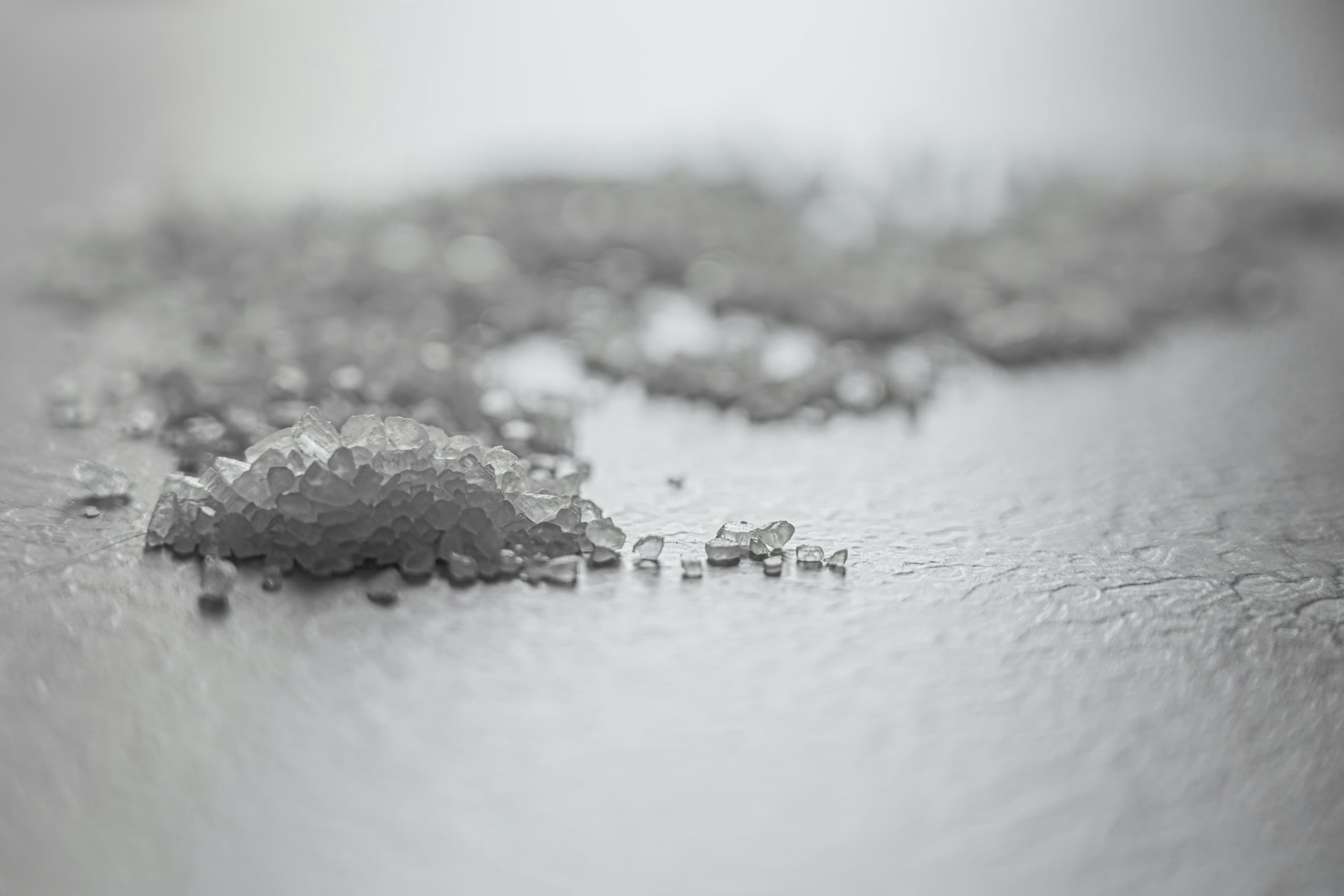
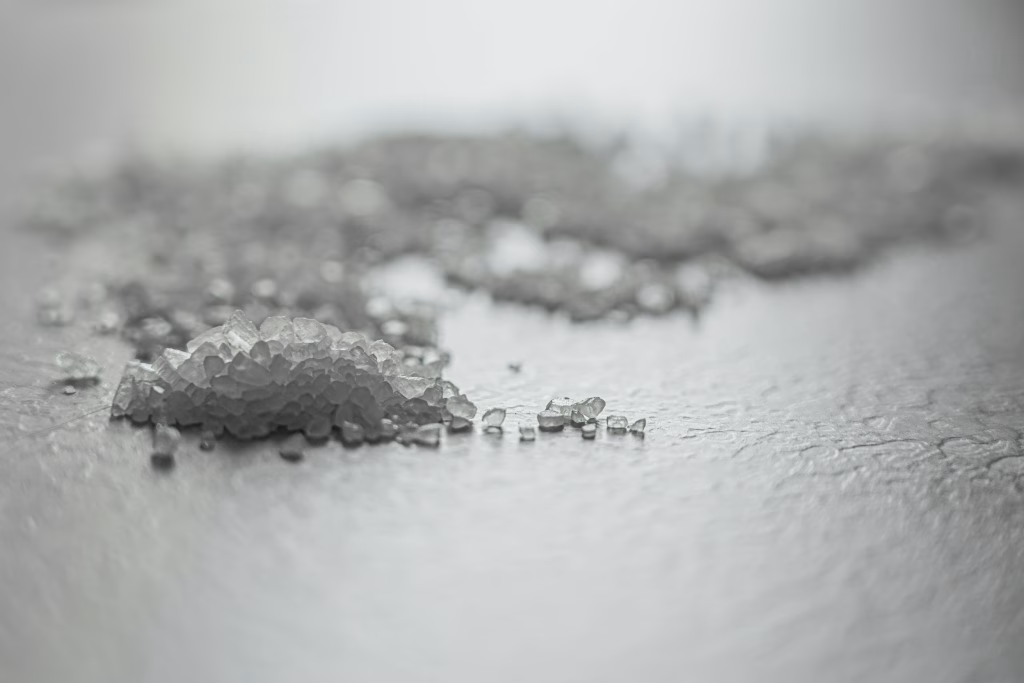
Celtic sea salt, also referred to as Sel Gris, is an unrefined salt traditionally harvested by hand along the coast of Brittany, France. In contrast to standard table salt, Celtic sea salt preserves its inherent minerals, subtle moisture, and trace elements, which are often removed during industrial processing.
In terms of appearance, the salt is distinguished by its grayish hue, a direct result of the clay and mineral content present in the salt flats where it is collected. The texture tends to be slightly moist, as the salt retains some of the natural seawater brine.
The harvesting process employs traditional wooden rakes, deliberately avoiding the use of modern machinery or chemicals, thus maintaining the salt’s authenticity and purity. In flavor, Celtic sea salt is noted for its mild, briny quality, lacking the pronounced sharpness commonly associated with highly refined table salt.
Nutritional Profile of Celtic Sea Salt
Celtic sea salt stands out due to its notably high mineral content. Unlike standard table salt, which is composed almost entirely of sodium chloride, Celtic sea salt contains over eighty trace minerals. This diverse mineral profile has contributed to its reputation among both culinary professionals and nutrition enthusiasts.
The principal component remains sodium chloride; however, the salt also provides appreciable amounts of magnesium, calcium, potassium, iron, zinc, and naturally occurring iodine—without the need for artificial fortification.
To provide a clearer nutritional perspective, approximately one teaspoon (5 grams) of Celtic sea salt contains:
– Calories: 0
– Sodium: about 1,500 to 1,700 milligrams
– Magnesium: approximately 10–20 milligrams
– Calcium: around 5–10 milligrams
– Potassium: roughly 3–5 milligrams
It is important to note that these values are approximate, as mineral concentrations may vary depending on geographic source and specific harvesting conditions. Nonetheless, Celtic sea salt offers a more complex mineral composition compared to conventional table salt.
Top Health Benefits of Celtic Sea Salt
Celtic sea salt is more than a culinary ingredient; its diverse mineral composition lends itself to a variety of potential health benefits.
1. Mineral-Rich Profile
Unlike highly refined table salt, Celtic sea salt retains a broad spectrum of minerals, including magnesium, calcium, potassium, and various trace elements critical for physiological processes.
– Magnesium contributes to muscle relaxation and supports cellular energy production.
– Calcium is essential for maintaining skeletal integrity and dental health.
– Potassium assists in fluid regulation and helps prevent muscle cramps.
2. Hydration and Electrolyte Support
The natural electrolytes present in Celtic sea salt may facilitate improved hydration. Consumption of “sole water”—a solution of water saturated with Celtic salt—is sometimes employed to restore electrolyte balance following exertion or perspiration.
3. Enhancement of Digestive Function
Celtic sea salt may stimulate the production of digestive enzymes, thereby aiding nutrient absorption and potentially reducing symptoms of bloating or indigestion.
4. Regulation of Blood Glucose
Preliminary research suggests that natural salts such as Celtic sea salt could contribute to stable blood sugar levels by supporting optimal insulin activity.
5. Promotion of Healthy pH Balance
By contributing to a more alkaline internal environment, Celtic sea salt may help counteract excessive bodily acidity, supporting immune function and mitigating inflammation.
6. Support for Energy Metabolism
The mineral content of Celtic sea salt plays a role in cellular energy production, which may help reduce fatigue and cognitive sluggishness.
7. Nervous System Regulation
Magnesium and sodium present in Celtic sea salt are integral to nerve conduction, muscle contraction, and the maintenance of healthy sleep patterns.
8. Skin Health Applications
Celtic sea salt is utilized in various topical applications, such as:
– Bath soaks, which may aid in muscle relaxation and detoxification.
– Exfoliating scrubs to remove dead skin cells.
– Salt sprays, which can be beneficial for conditions like acne and eczema.
9. Natural Detoxification
The minerals in Celtic sea salt are thought to activate the body’s intrinsic detoxification pathways, assisting in the elimination of heavy metals and toxic substances.
10. Support for Thyroid Function
Unlike iodized table salt, Celtic sea salt provides naturally occurring iodine and other minerals, which may contribute to healthy thyroid activity.
In summary, Celtic sea salt’s unique mineral makeup sets it apart from refined salt, offering potential benefits that extend beyond basic seasoning.
Celtic Sea Salt vs Other Salts
| Feature | Celtic Sea Salt | Himalayan Pink Salt | Table Salt |
|---|---|---|---|
| Processing | Unrefined, hand-harvested | Mined, minimally processed | Highly refined, chemical-treated |
| Mineral Content | 80+ trace minerals | 80+ minerals | Mostly sodium chloride |
| Color | Gray, moist | Pink | White, dry |
| Taste | Mild, briny | Slightly sweet | Sharp, salty |
| Health Benefits | High | High | Low |
How to Use Celtic Sea Salt
Celtic sea salt, notable for its mineral content and traditional harvesting methods, serves a variety of practical applications:
Culinary Uses
Celtic sea salt functions as both a cooking and finishing salt. It may be sprinkled on salads, vegetables, soups, and grilled foods, often enhancing flavors more noticeably than conventional table salt due to its mineral complexity.
Hydration (Sole Water)
A common practice involves dissolving approximately one teaspoon of Celtic sea salt in a glass jar of water and allowing it to rest overnight. Users then consume about one tablespoon of this saline solution mixed into a glass of water daily, citing potential benefits for hydration and electrolyte balance, although robust clinical evidence remains limited.
Bath Soak
When added to warm bathwater (roughly one cup per bath), Celtic sea salt is believed to assist in muscle relaxation and promote a mild detoxifying effect, attributable to its mineral content.
Exfoliation
By combining Celtic sea salt with coconut oil, individuals can create a natural skin scrub. This mixture is applied to exfoliate and smooth the skin, leveraging the salt’s granular texture.
Oral Rinse
Dissolving Celtic sea salt in warm water produces a simple mouthwash that may help reduce oral bacteria, a practice rooted in traditional oral hygiene.
Potential Side Effects and Precautions
Despite its healthful reputation, excessive intake of any salt—including Celtic sea salt—can be detrimental. Overconsumption may elevate blood pressure, particularly in salt-sensitive populations, and should be avoided by individuals with kidney disease. Furthermore, Celtic sea salt is not intended as a substitute for medical therapies. General sodium intake recommendations for adults typically range from 1,500 to 2,300 mg per day (approximately one teaspoon of Celtic salt).
Guidelines for Purchasing Celtic Sea Salt
– Authenticity: Genuine Celtic sea salt is harvested in Brittany, France.
– Unrefined: Select products free from anti-caking agents or additives.
– Moisture Content: High-quality Celtic sea salt is characteristically damp.
– Packaging: Favor glass jars or food-grade pouches to preserve quality.
Notable brands include Celtic Sea Salt® (Selina Naturally), SaltWorks®, and Vital Mineral Blend.
Sample Recipes Utilizing Celtic Sea Salt
1. Lemon Water with Celtic Sea Salt
Combine one glass of filtered water, juice from half a lemon, and a pinch of Celtic sea salt. This beverage is recommended in the morning for potential hydration and detoxification benefits.
2. Mineral-Rich Smoothie
Blend one banana, one cup of spinach, one cup of coconut water, one teaspoon of honey, and a pinch of Celtic sea salt. This smoothie may aid in replenishing minerals and supporting energy.
3. Detox Bath Mix
Mix one cup of Celtic sea salt, half a cup of Epsom salt, and ten drops of lavender oil. Add to bathwater and soak for approximately twenty minutes to facilitate relaxation.
In summary, Celtic sea salt is a multi-faceted ingredient valued in both culinary and wellness contexts. Nonetheless, moderation and attention to individual health needs remain essential.
Celtic Sea Salt in Traditional Medicine
For centuries, natural salts like Celtic salt were used in Ayurveda, Chinese medicine, and European folk remedies for:
Healing wounds
Treating skin infections
Improving digestion
Balancing energy
Frequently Asked Questions (FAQs)
1. Is Celtic sea salt better than table salt?
Yes, because it is unrefined and mineral-rich, unlike table salt which is stripped of nutrients.
2. Can I use Celtic sea salt every day?
Yes, in moderation. It’s safe for daily cooking and hydration.
3. Does Celtic sea salt raise blood pressure?
Excess salt can raise blood pressure, but natural salts in moderate amounts may actually support balance.
4. Can I replace Himalayan salt with Celtic salt?
Yes, both are mineral-rich. Celtic salt is moister and brinier, while Himalayan salt is drier and sweeter.
5. Is Celtic sea salt good for weight loss?
Indirectly—by supporting hydration, digestion, and metabolism, it may aid weight management.
Conclusion
Celtic sea salt is more than just a seasoning—it’s a nutrient-dense, natural alternative to refined table salt. Packed with minerals, it supports hydration, digestion, skin health, and overall well-being.
When used in moderation, Celtic sea salt can be a valuable addition to your kitchen and wellness routine. Whether you use it in cooking, sole water, skin care, or baths, this ancient salt offers modern-day benefits for a healthier lifestyle.