Most people do not think much about saliva. It is something we have in our mouths every day. Yet saliva plays a very important role in keeping our teeth and gums healthy.
Without saliva, it would be harder to eat, speak, taste food, and protect our teeth from damage. Saliva helps wash away food particles, fights harmful bacteria, and keeps the mouth moist. It is one of the body’s natural defenses against tooth decay and gum disease.
In this guide, you will learn what saliva is, how it works, and why it is so important for dental health.
Table of Contents
What Is Saliva?
Saliva is a clear liquid made by special glands in the mouth called salivary glands. These glands produce saliva throughout the day and night.
An average person produces about 2 to 4 pints of saliva each day. That may seem like a lot, but your body needs it to keep your mouth healthy.
Saliva is mostly water, but it also contains:
- Minerals
- Proteins
- Enzymes
- Antibacterial compounds
- Mucus
These ingredients work together to protect your teeth and gums.
Why Is Saliva Important?
Saliva does much more than keep your mouth wet.
It helps:
- Protect teeth from decay
- Wash away food particles
- Neutralize acids
- Support digestion
- Fight harmful bacteria
- Keep gums healthy
- Help with speaking and swallowing
- Repair tooth enamel
Without enough saliva, your oral health can quickly suffer.
Saliva Helps Prevent Tooth Decay
One of saliva’s most important jobs is protecting teeth from cavities.
Every time you eat, bacteria in your mouth feed on sugars and starches. These bacteria produce acids that attack tooth enamel.
Enamel is the hard outer layer of your teeth.
When acid stays on teeth for too long, it can cause cavities.
Saliva helps by washing away food and reducing acid levels in the mouth.
This lowers the risk of tooth decay.
Saliva Neutralizes Harmful Acids
Your mouth naturally contains bacteria. Some of these bacteria create acids after meals.
Acid can weaken tooth enamel and make teeth more vulnerable to cavities.
Saliva contains substances that help neutralize these acids.
This helps restore a healthy balance in the mouth.
The faster acids are neutralized, the less damage they can cause.
Saliva repairs tooth enamel.
Many people do not realize that saliva helps repair teeth.
Saliva contains important minerals such as:
- Calcium
- Phosphate
- Fluoride
These minerals help strengthen enamel through a process called remineralization.
When enamel begins to weaken, saliva can replace lost minerals and help protect teeth from further damage.
This natural repair process is one reason saliva is so valuable.
Saliva Washes Away Food Particles
Tiny food particles often get trapped between teeth and around gums.
If these particles stay in the mouth too long, bacteria can grow and produce harmful acids.
Saliva acts like a natural cleaning system.
It helps wash away leftover food and reduces the buildup of plaque.
This keeps the mouth cleaner between brushing sessions.
Saliva Controls Bacteria
Not all bacteria are bad, but some can cause dental problems.
Saliva contains antibacterial compounds that help control harmful bacteria.
These natural defenses help reduce the risk of:
- Tooth decay
- Gum disease
- Mouth infections
- Bad breath
A healthy saliva flow helps maintain a balanced environment in the mouth.
Saliva Helps Prevent Gum Disease
Healthy gums are just as important as healthy teeth.
When bacteria build up along the gum line, inflammation can occur.
This may lead to gum disease.
Saliva helps remove bacteria and food particles before they can cause serious problems.
Good saliva production supports strong and healthy gums.
Saliva Reduces Bad Breath
Bad breath often develops when bacteria break down food particles left in the mouth.
Dry mouth can make bad breath worse because there is less saliva available to clean the mouth.
Saliva helps reduce odor by:
- Washing away food debris
- Controlling bacteria
- Keeping tissues moist
A healthy saliva flow can help keep breath fresher throughout the day.
Saliva Helps You Taste Food
Saliva plays a key role in the sense of taste.
Food must dissolve in saliva before taste buds can detect flavors.
Without enough saliva, foods may seem bland or tasteless.
This is one reason people with dry mouth often notice changes in taste.
Saliva Makes Swallowing Easier
Saliva moistens food and helps form it into a soft mass that is easy to swallow.
Without saliva, swallowing can become difficult and uncomfortable.
This function is important for both children and adults.
Saliva Supports Digestion
Digestion begins in the mouth.
Saliva contains enzymes that start breaking down food before it reaches the stomach.
One important enzyme is amylase.
Amylase helps break down carbohydrates into simpler sugars.
This makes digestion easier for the body.
What Happens When You Do Not Produce Enough Saliva?
A lack of saliva is called dry mouth or xerostomia.
Dry mouth can affect people of all ages.
Common symptoms include:
- Dry feeling in the mouth
- Sticky saliva
- Bad breath
- Difficulty swallowing
- Difficulty speaking
- Increased cavities
- Sore throat
- Cracked lips
When saliva levels drop, the risk of dental problems increases.
Causes of Dry Mouth
Many factors can reduce saliva production.
Medications
Hundreds of medications list dry mouth as a side effect.
These include:
- Allergy medicines
- Blood pressure medications
- Antidepressants
- Pain medications
Aging
Older adults often experience reduced saliva production.
Medical Conditions
Certain health conditions can affect saliva glands.
Examples include:
- Diabetes
- Sjögren’s syndrome
- Parkinson’s disease
Cancer Treatment
Radiation therapy near the head and neck can damage saliva glands.
Dehydration
Not drinking enough water can reduce saliva production.
Signs That Saliva Levels May Be Low
You may have low saliva production if you notice:
- Constant thirst
- Dry tongue
- Difficulty chewing
- Frequent cavities
- Mouth sores
- Thick saliva
- Trouble speaking
A dentist can help determine the cause.
How to Increase Saliva Naturally
Fortunately, there are several ways to support healthy saliva production.
Drink More Water
Staying hydrated is one of the easiest ways to maintain saliva flow.
Drink water regularly throughout the day.
Chew Sugar-Free Gum
Chewing stimulates saliva glands.
Sugar-free gum can help increase saliva production.
Eat Crunchy Fruits and Vegetables
Foods such as apples and carrots encourage saliva flow.
They also help clean teeth naturally.
Avoid Tobacco Products
Smoking and tobacco use can worsen dry mouth.
Limit Alcohol
Alcohol can dry out the mouth and reduce saliva production.
Use a Humidifier
A humidifier can add moisture to the air while you sleep.
This may help reduce nighttime dry mouth.
Foods That Support Oral Health
Certain foods can help maintain healthy saliva production and strong teeth.
These include:
Apples
Apples encourage chewing and saliva production.
Carrots
Carrots help stimulate saliva flow and provide important nutrients.
Cheese
Cheese contains calcium and may help protect enamel.
Yogurt
Yogurt supports oral health and provides beneficial nutrients.
Leafy Greens
Spinach and kale contain vitamins and minerals that support healthy teeth and gums.
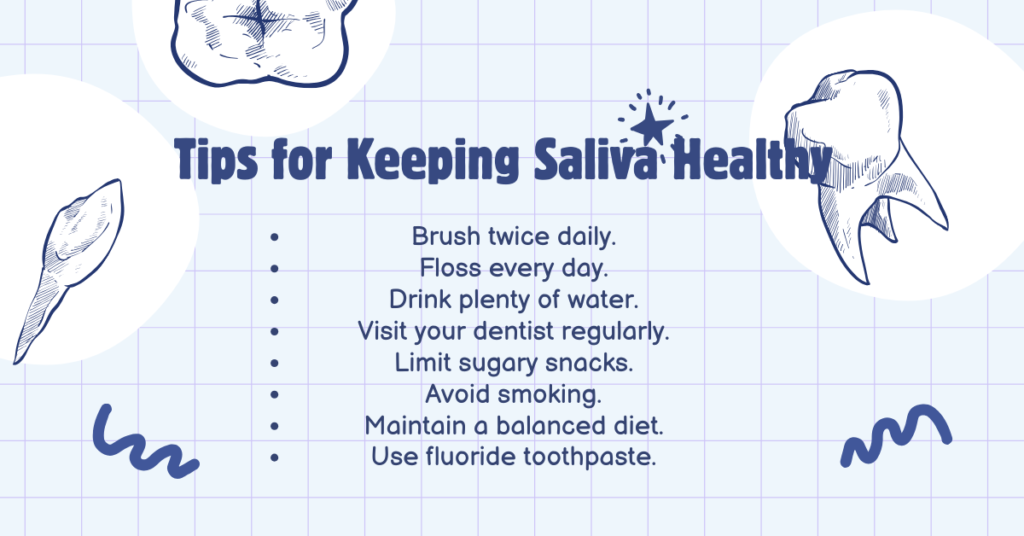
Tips for Keeping Saliva Healthy
Follow these simple habits:
- Brush twice daily.
- Floss every day.
- Drink plenty of water.
- Visit your dentist regularly.
- Limit sugary snacks.
- Avoid smoking.
- Maintain a balanced diet.
- Use fluoride toothpaste.
These habits help support saliva and overall oral health.
Frequently Asked Questions
Is Saliva Good for Teeth?
Yes. Saliva helps protect teeth from cavities, neutralizes acids, and repairs enamel.
Can Dry Mouth Cause Cavities?
Yes. Without enough saliva, bacteria and acids can damage teeth more easily.
How Much Saliva Does a Person Produce Daily?
Most adults produce about 2 to 4 pints of saliva each day.
What Foods Increase Saliva Production?
Apples, carrots, celery, and sugar-free gum can help stimulate saliva flow.
Conclusion
Saliva is one of the most important parts of a healthy mouth. It protects teeth, fights harmful bacteria, washes away food particles, and helps repair enamel. Saliva also supports digestion, swallowing, and taste.
When saliva production decreases, the risk of cavities, gum disease, and bad breath increases. That is why keeping your mouth hydrated and maintaining good oral hygiene are so important.
By drinking enough water, eating healthy foods, and visiting your dentist regularly, you can support healthy saliva production and enjoy stronger teeth and gums for years to come.