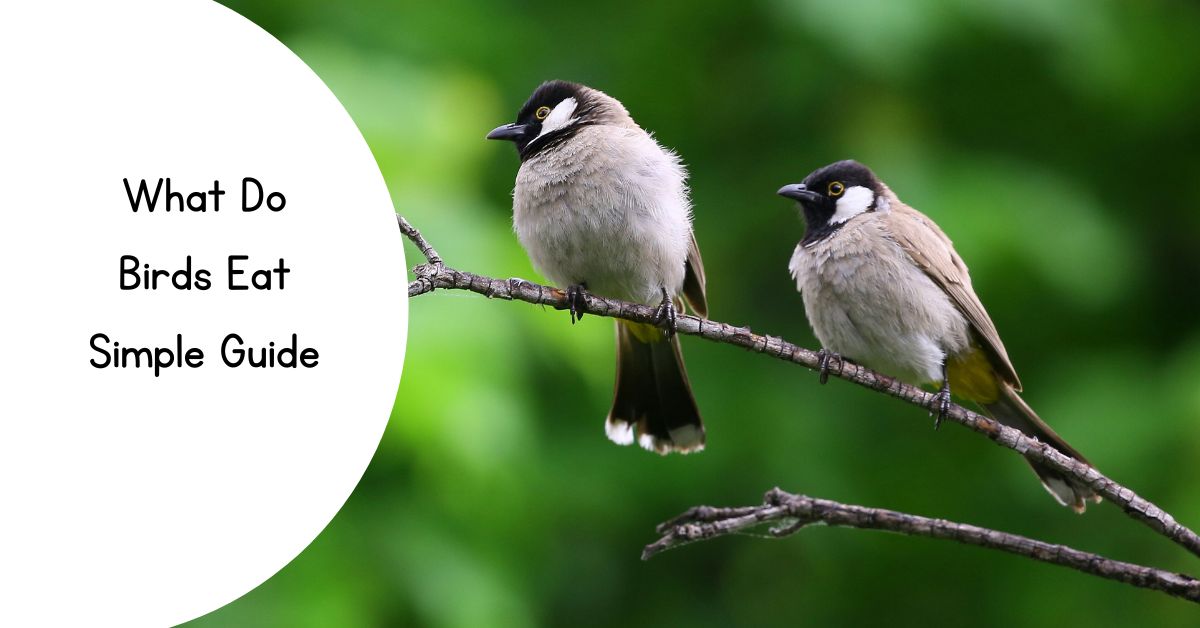
Have you ever peered out your window and noticed a small bird hopping around on the lawn and what do birds eat? Maybe you saw it searching the ground for food or flapping its wings to land safely on a tree. What do birds eat, or looking for? Food!
Birds can be found almost anywhere. Birds are found in forested areas, in cities, in the desert, and even near the sea. Not all birds, however, eat the same type of food, just as we don’t all eat pizza at every meal. Some of us eat pizza, while some of us like fruit, soup or fish.
Birds have different beaks and legs, and they have different ways of obtaining food. Some birds will only eat seeds, while other birds only eat bugs, worms, fish or small animals. Some birds will sip sweet juices from flowers. Other birds will eat almost anything they can get their beak into.
In this article, we will explore the fascinating world of bird feeding. You will discover what food common backyard birds feed on, what food baby birds require, and how you can provide food for birds that visit your yard.
Table of Contents
The Main Types of Bird Food
Birds consume a wide range of food sources. Researchers categorize bird specie diets into numerous larger families. You may relate it to menus seen by diners within the restaurant industry. Below, you will see the major categories (or sections on a menu) of bird based diners.
1st Category is Seeding/Grains
Seed and Grain consumption is the defining dietary product group for many avian species. Seeds (the reproductive pod of various plant types) are harvested from grass species (e.g., oats), flowering species (e.g., asparagus) and woody plant types (e.g., pine cones) and are broken apart by the birder’s mandibles (to make easy to digest). Grains are harvested from various agricultural crop types (e.g., corn, wheat, rice) and are also ground/processed by birds’ mandibles to provide a ready source of calories and energy to fuel the bird’s daily activities.
The birds most likely consuming predominantly seed and grain products – Sparrows, (select species) Finch, cardinal and/or dove/pigeon types.
Why Seeds?
The primary reason these birds consume seed/grain products is that they are high in caloric density and contain substantial resources for energy needs. Birds must have energy to fly, keep themselves warm, and have sufficient resources to attract mates during breeding seasons (a.k.a., courtship). Additionally, birds have the ability to actively retain for long periods of time (i.e., after they have found). By “retaining a resource” when they have found them, birds have access to additional calories/energy needed throughout the day.
2nd category of dietary consumption: Insects/Bugs
Many birds eat and highly value insects, as they provide an additional source of calories and energy. Insects are a relatively low-density/high-quantity protein source for birds, as well as easy-to-obtain sources of food for birds.
The birds most likely to consume insect products exclusively: Robins, Bluebirds, Warblers, swallows, and woodpeckers.
What insect products? Examples include beetles, caterpillars, ants, grasshoppers, crickets, spiders, worms, grubs, etc., as even though worms are not part of the insect classification, they still provide sufficient energy (calories) for birds.
Example of total number of caterpillar consumed by a single bluebird in 1 24-hour period exceeds 50.
Fruits and Berries – The birds eat fruits which are sweet and full of moisture and vitamins. Fruits can be found on trees, bushes or vines. There are many types of birds which will feed upon fruit such as orioles, mockingbirds, waxwings and many types of parrots. The types of fruits that the birds enjoy include (but are not limited to) berries (blueberries, raspberries, blackberries), cherries, grapes, apples and oranges. Birds such as the banana quit and sunbird will also eat bananas and melons!
Nectar – Nectar is a type of sweet liquid found within flowers and is compared to water that has sugar added; therefore, birds which consume nectar have long, slender beaks with even longer tongues. Some examples of nectar-feeding birds include hummingbirds, sunbirds and honeyeaters. Fun Fact: a hummingbird’s tongue is so long that when not in use, the tongue curls up in the back of its head!
Fish and Marine Animals – Many species of birds can be found along aquatic environments, hunting for fish, crab, shrimp and various marine wildlife. The types of birds which eat fish include herons, egrets, kingfishers, penguins and pelicans. Herons typically use a “waiting” technique, remaining completely still as they approach the water to catch fish; kingfishers dive from a perch to catch fish; and pelicans use a “scooping” technique with their large mouths to catch fish.
How a Bird’s Beak Tells You What Do Birds Eat
You can guess what a bird eats just by looking at its beak. Beaks are like tools. Different tools do different jobs.
Short, Thick Beaks (Cone-shaped)
These beaks are great for cracking open seeds. Think of a nutcracker. The bird holds a seed and crushes it.
Example birds: Cardinal, finch, sparrow.
Long, Thin Beaks (Spear-shaped)
These beaks are for poking into holes or mud to pull out bugs or worms.
Example birds: Robin, bluebird, heron.
Short, Skinny Beaks (Insect-catching)
These beaks are for grabbing bugs right out of the air. The bird opens its beak wide and swoops.
Example birds: Swallow, swift, flycatcher.
Hooked Beaks (Curved like a hook)
These beaks are for tearing meat. A hawk or owl uses its hooked beak to rip apart a mouse or snake.
Example birds: Hawk, eagle, owl, parrot.
Long, Tubelike Beaks (Needle-like)
These beaks are for sipping nectar from deep inside flowers. The beak is like a straw.
Example bird: Hummingbird.
Thick, Spoon-shaped Beaks
These beaks help birds scoop up water and strain out small fish or shrimp.
Example bird: Duck, flamingo.
What Do Backyard Birds Eat?
Now let’s talk about the birds you see every day. If you have a yard, a park, or a school playground nearby, you have seen these birds.
American Robin
Robins love worms. But they also eat bugs, berries, and fruit. You will see a robin hopping on the grass. It tilts its head to listen for worms moving underground. Then it pulls the worm out with its beak.
Northern Cardinal
Cardinals have bright red feathers (the males) and a thick orange beak. They love sunflower seeds. They also eat berries and grapes.
Blue Jay
Blue jays are loud and smart. They eat peanuts, sunflower seeds, corn, and acorns. Sometimes they eat bugs or even small frogs. Blue jays also steal food from other birds.
House Sparrow
Sparrows are small and brown. They eat small seeds like millet and canary seed. They also eat crumbs from bread or crackers (but bread is not very healthy for them).
Downy Woodpecker
Woodpeckers eat bugs that live under tree bark. They also eat suet (hard animal fat) from bird feeders. Suet gives them lots of energy.
Mourning Dove
Doves are plump and gray. They eat seeds that fall on the ground. They like millet, corn, and sunflower seeds. Doves eat by pecking quickly at the ground.
Hummingbird
Hummingbirds drink nectar from flowers. In backyards, people hang red feeders filled with sugar water (one part sugar, four parts water). Hummingbirds also eat tiny insects for protein.
Conclusion: Birds Need Our Help
Now you know the answer to “What do birds eat?” They eat seeds, bugs, fruit, nectar, fish, and even small animals. Their beaks and bodies are made for finding their favorite foods.
But here is something important. Birds are having a harder time finding food today. Why? Because people build more houses and roads. We cut down trees. We use chemicals on lawns that kill bugs. We fill the air and water with pollution.
The good news is that you can help. It is easy.
- Put up a bird feeder with sunflower seeds.
- Plant a bush or tree that grows berries.
- Leave a patch of your yard wild so bugs can live there.
- Put out a birdbath with clean water.
- Keep your cat indoors so birds stay safe.
When you help birds find food, you get to watch them every day. You will see bright red cardinals, tiny chickadees, and maybe even a hummingbird hovering in the air.
Birds make the world more beautiful. They eat pests. They spread seeds. They sing to us in the morning. Now you can help them by knowing what they like to eat.
So go outside. Watch the birds. And maybe put out a little snack for them. They will thank you with their songs.
Final Summary Table – What Birds Eat (Quick Look)
| Bird Name | Main Food | How to Help |
|---|---|---|
| Robin | Worms, bugs, berries | Plant berry bushes |
| Cardinal | Sunflower seeds | Fill feeder with black-oil seeds |
| Blue Jay | Peanuts, acorns, corn | Offer unsalted peanuts |
| Hummingbird | Nectar, tiny bugs | Hang sugar-water feeder |
| Woodpecker | Bugs, suet | Hang suet cake |
| Sparrow | Small seeds | Scatter millet on ground |
| Hawk | Mice, snakes | No help needed – wild hunters |
| Crow | Almost anything | Offer unsalted peanuts or eggs |
Thank you for reading! Share this article with a friend who loves birds. And remember: every bird needs three things – food, water, and a safe place to live. You can give them all three starting today.