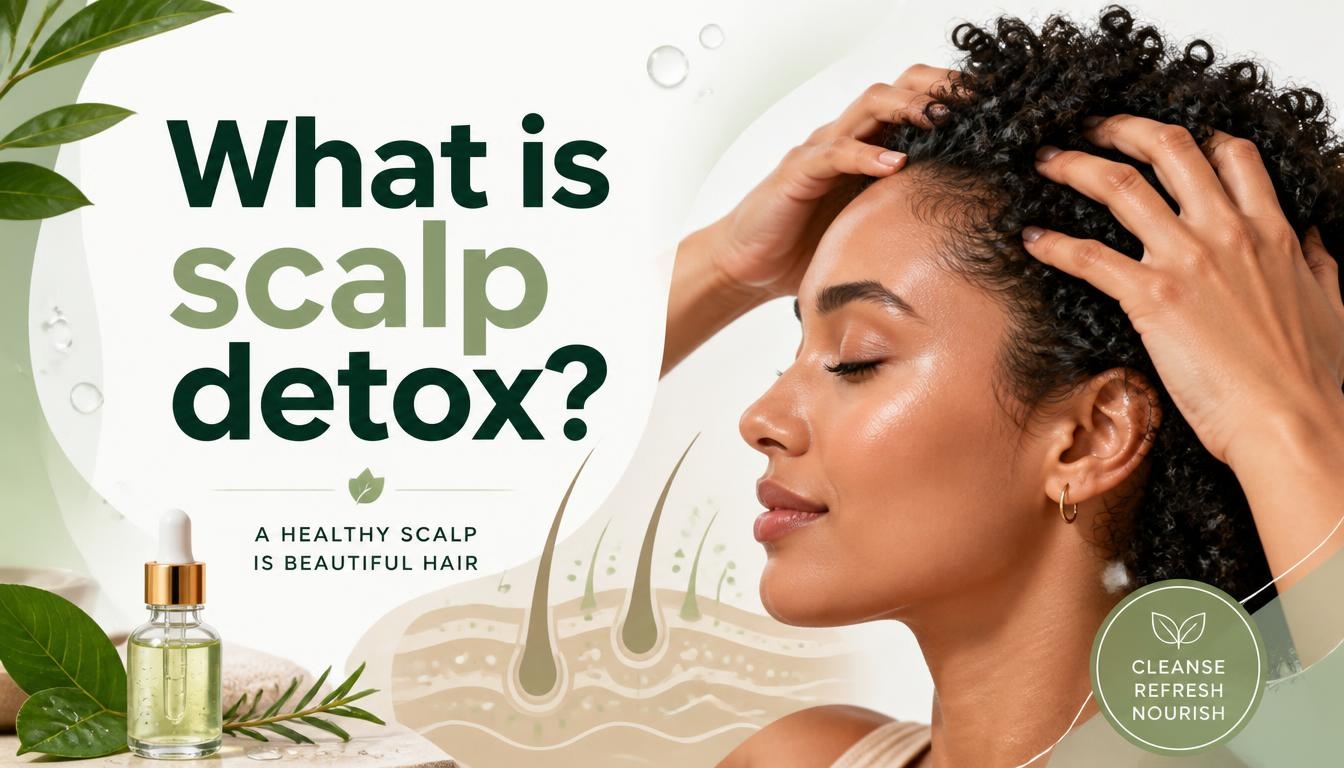

Scalp detox is a deep cleanse for the skin on your head. It targets product residue from dry shampoo, gels, and leave-ins, along with excess oil, sweat, dead skin cells, and everyday environmental residue that regular shampoo often leaves behind. The goal is a cleaner scalp surface that feels lighter and less congested.
The word “detox” is mostly marketing. Your scalp does not store toxins that need flushing out the way some wellness claims suggest. What actually happens is thorough removal of surface buildup so the skin can function more comfortably. Dermatologists describe it as targeted cleansing and mild exfoliation rather than a medical detoxification process.
Table of Contents

What is scalp detox?
Buildup becomes noticeable when roots feel coated soon after washing, hair looks flat or weighed down, or the scalp itches without clear dandruff. People who use a lot of styling products, dry shampoo, or heavy oils tend to notice it more. Those who wash less frequently or live in hard-water areas can also accumulate residue faster. A realistic example: someone who relies on dry shampoo between washes may find white powder and oil mixed at the roots after several days. Their usual shampoo no longer leaves the scalp feeling fully clean, and a clarifying wash or gentle scrub restores that fresh baseline.
Original insight
Many people treat scalp detox like a weekly ritual when their actual need is far less frequent. Over-cleansing or aggressive scrubbing can strip the scalp’s natural oils, leading to tightness, more flaking, or rebound oiliness. The smarter approach matches the method to the problem. Ordinary product residue often responds to a clarifying shampoo used every week or two. Stubborn scale or flaking may benefit from a salicylic-acid formula that loosens dead cells. True seborrheic dermatitis or psoriasis needs medicated options containing ingredients like ketoconazole rather than a general “detox” product.
Home Therapy
At home, the process stays simple. Wet the hair thoroughly so water reaches the scalp. Apply a clarifying or salicylic-acid shampoo directly to the roots and massage with fingertips (not nails) for a minute or two. Some people add a fine-grain scalp scrub or a soft silicone brush for light physical help. Rinse well, then condition the lengths only. Professional salon versions may include steaming, specialized massages, or clay masks, but the core action remains the same: lift residue without damaging the barrier.
Internal links that pair well with this topic include guidance on managing dandruff and seborrheic dermatitis, and practical advice for oily versus dry scalp care.
Frequently Asked Questions
Does scalp detox help hair grow longer or thicker?
A cleaner scalp can create better conditions for hair to grow without interference from heavy residue, but it does not change genetic growth patterns or reverse thinning on its own.
How often should I detox my scalp?
Most people benefit from a clarifying or deeper cleanse every one to four weeks, depending on product use and oiliness. Daily or very frequent aggressive treatments usually do more harm than good.
Can I use apple cider vinegar or baking soda at home?
Diluted apple cider vinegar rinses are sometimes used for mild residue, but strong or undiluted versions and baking soda can disrupt the scalp’s pH and cause irritation. Stick to formulated products when possible.
Is scalp detox safe for color-treated or curly hair?
Clarifying shampoos can fade color or dry out textured hair if used too often. Choose gentler formulas and follow with a good conditioner or mask on the lengths.
When should I see a dermatologist instead of detoxing?
Persistent redness, thick yellow scale, painful bumps, sudden shedding, or symptoms that do not improve with gentle cleansing warrant a professional check. These can signal conditions that need specific treatment.
Will it stop my scalp from getting oily so quickly?
Removing buildup can temporarily improve the feel, but oil production is largely hormonal and genetic. Consistent, appropriate cleansing helps more than occasional deep treatments.
Scalp detox works best when treated as occasional maintenance rather than a cure-all. Focus on thorough but gentle cleansing matched to your actual residue level, and the scalp usually feels more comfortable without extra drama.
Written by: Dr. Lena Hartman, Board-Certified Dermatologist
Reviewed/Updated: November 9, 2026