Keratosis pilaris is a common, harmless skin condition that causes small, rough bumps around hair follicles, often described as looking like permanent goosebumps or chicken skin. The bumps form when excess keratin (the tough protein that makes up the outer layer of skin, hair, and nails) builds up and plugs the follicle openings instead of shedding normally. They typically appear on the outer upper arms and thighs, though they can also show up on the buttocks, cheeks (especially in children), or other areas with hair follicles. The bumps are usually skin-colored, white, red, or brownish depending on your skin tone, and the surrounding skin often feels dry and sandpaper-rough. Most people experience little to no itching or pain—the main issue is the texture and appearance.
Table of Contents
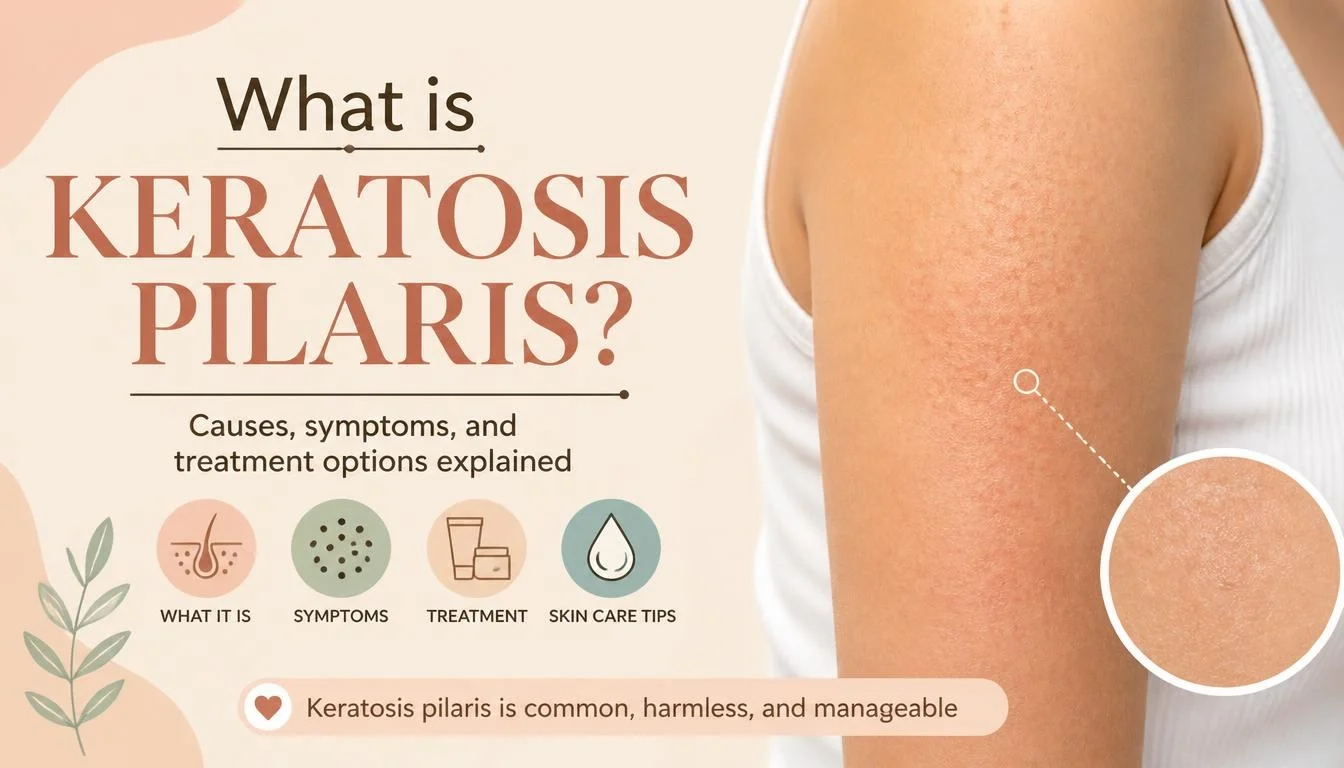
It is extremely widespread. Roughly half to 70 percent of teenagers and about 40 percent of adults have it at some point. It frequently runs in families with an autosomal dominant pattern, meaning a parent with the condition has a good chance of passing it on. Mutations affecting proteins like filaggrin (important for skin barrier function) are linked to it, which also explains why it often appears alongside dry skin conditions such as atopic dermatitis (eczema) or ichthyosis vulgaris. Cold, dry weather makes it more noticeable because lower humidity reduces the skin’s moisture, allowing the plugs to stand out more. It is not contagious, not caused by poor hygiene, and not a sign of any serious internal problem.
A realistic example: What is keratosis pilaris
A teenager might notice the bumps on her upper arms becoming more obvious after a dry winter, especially when she switches to short-sleeved shirts in spring. The skin feels rough when she runs her hand over it, and she may feel self-conscious in photos or at the pool, even though nothing hurts. Many people first notice it in childhood or around puberty, when hormonal changes and increased dry skin can make the plugs more prominent. For a lot of people it gradually improves in their 20s or 30s, though it can persist or flare with dryness.
There is no cure, and treatments mainly improve the look and feel rather than eliminate the tendency for keratin to accumulate. The foundation is consistent moisture. Apply a thick, fragrance-free cream or ointment (look for ones containing urea, lactic acid, or glycerin) to damp skin within a few minutes of bathing, then reapply as needed during the day. Short, lukewarm showers help more than long hot ones, which strip natural oils. Gentle physical exfoliation with a soft cloth or loofah can loosen surface plugs, but aggressive scrubbing often worsens redness and irritation.
Over-the-counter or prescription keratolytics that contain urea (often 10–40 percent), lactic acid, salicylic acid, or alpha-hydroxy acids help soften and release the plugs. Topical retinoids can speed cell turnover in more stubborn cases, though they may cause temporary dryness or irritation and are usually avoided during pregnancy. In selective situations dermatologists may offer laser treatments aimed at redness or texture, but results vary and these are not first-line for most people. The practical insight many overlook is that consistency beats intensity: daily moisture and a mild keratolytic used for weeks usually produce more reliable smoothing than occasional aggressive treatments. Avoid picking or squeezing the bumps—that can lead to temporary darkening or lightening of the skin and rarely infection.
Internal links worth exploring if you have related concerns include guidance on managing dry skin year-round and information about atopic dermatitis, since the two frequently overlap and share similar barrier-repair strategies.
Frequently Asked Questions
Is keratosis pilaris the same as acne?
No. Acne involves oil, bacteria, and inflammation inside follicles; keratosis pilaris is purely excess keratin plugging the follicle. Squeezing the bumps does nothing useful and can irritate the skin further.
Will it go away on its own?
It often improves significantly with age, especially after the late teens or early 20s. For some it remains mild lifelong but becomes less noticeable with good skin care and in humid weather.
Can diet or supplements clear it?
There is no strong evidence that cutting gluten, dairy, or adding specific vitamins reliably clears typical keratosis pilaris. Focus remains on topical care and moisture retention. Severe nutritional deficiencies can affect skin in other ways, but they are uncommon causes here.
Does it only affect fair skin?
No. It occurs across skin tones. On darker skin the bumps may appear brown or hyperpigmented rather than red, and post-inflammatory color changes can linger longer if the area is irritated.
When should I see a doctor?
If the bumps become very itchy, widespread, or start to look inflamed beyond the usual mild redness, or if you are unsure whether the diagnosis is correct (it can occasionally be confused with other follicular conditions). A dermatologist can confirm it clinically in most cases—no special tests are usually needed.
Are expensive “KP-specific” products necessary?
Not really. Many effective options are simple pharmacy moisturizers with urea or lactic acid. Fancy formulations can help if they contain the right active ingredients at useful strengths and you tolerate them, but the active ingredients and consistent use matter more than branding.
Keratosis pilaris is one of those conditions that looks more alarming than it is. Once you understand it is a genetic tendency toward follicular plugging rather than a disease that needs aggressive intervention, management becomes straightforward: protect the skin barrier, gently encourage the plugs to release, and accept that perfect smoothness may not be realistic for everyone. For most people the biggest relief comes from knowing it is common, harmless, and improvable with daily habits rather than dramatic treatments.
Written by: Dr. Lena Hartman, Board-Certified Dermatologist