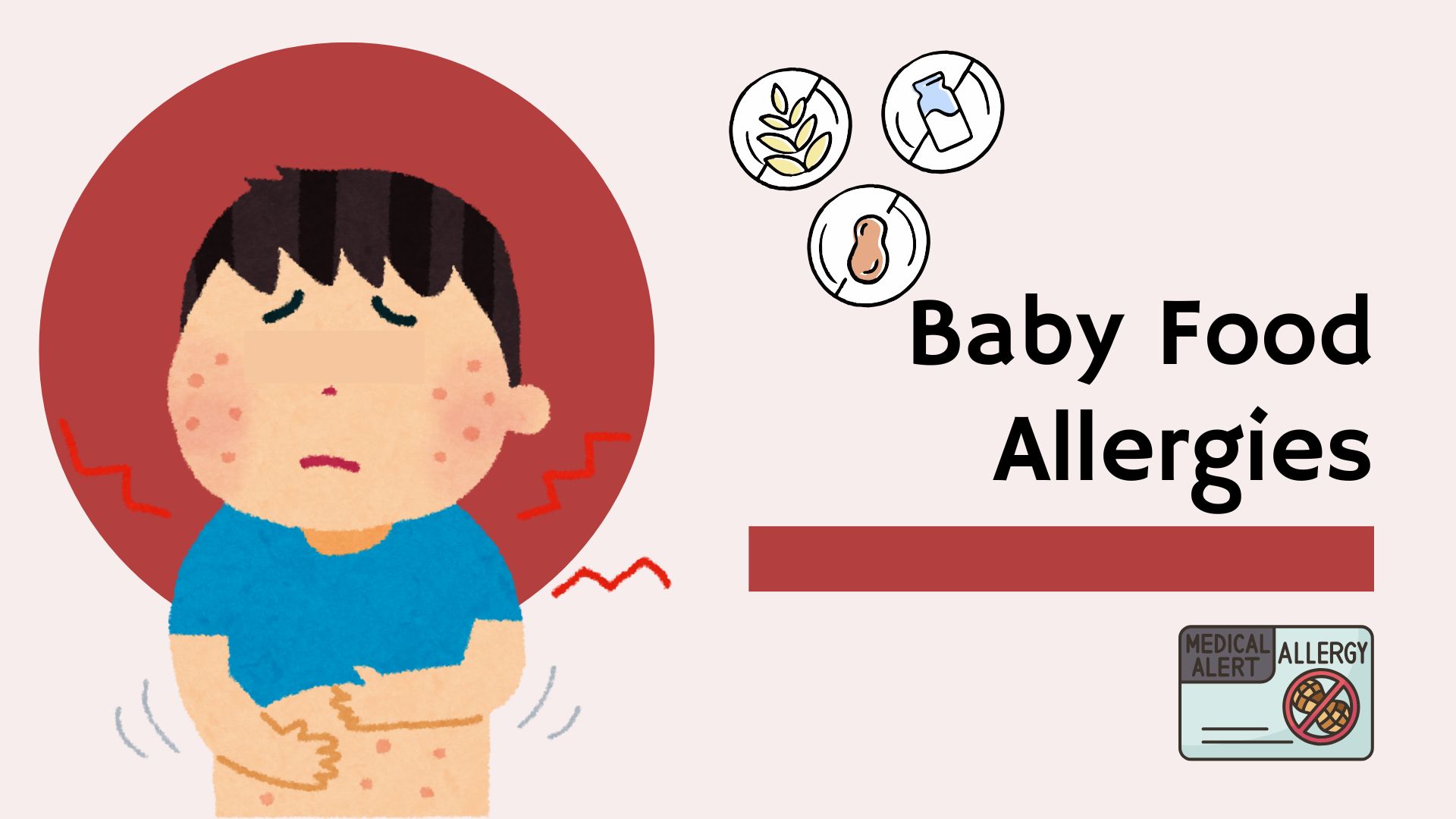
Are you worried about your baby developing allergies to food? Understand the causes of baby food allergies, the symptoms to recognize between mild and severe reactions and the safe methods of introducing food allergens to infants along with the steps to take in case of a reaction.
The introduction of solids into your baby’s diet is an important milestone during the first year of child’s life. Many parents feel excited and anxious when they think about the possibility of food allergies. Questions arise in the parents’ minds about whether or not peanut butter will cause an allergic reaction in their babies. Besides, they also wonder about the signs of a mild allergic reaction and if they should give allergens to their infants right away or wait a while.
However, there are good news because in the last couple of years pediatric recommendations have become more reassuring than before — in fact, the pediatricians now recommend introducing allergy-causing food to a child’s diet right away instead of waiting for that to happen. It is also necessary to realize food allergies are not as frequent as parents tend to think.
Table of Contents
What Is a Food Allergy, Exactly?
A food allergy happens when a baby’s immune system mistakenly identifies a harmless food protein as a threat and mounts a defensive response against it. This is different from a food intolerance, which involves the digestive system struggling to process a food (like lactose) but doesn’t involve the immune system at all.
Allergic reactions can range from mild — a few hives or an itchy mouth — to severe, involving difficulty breathing or a whole-body reaction called anaphylaxis. The severity of a reaction can also change between one exposure and the next, which is part of why any suspected food allergy should be evaluated by a doctor rather than managed purely by trial and error at home.
It’s also worth understanding that allergic reactions are typically IgE-mediated, meaning they involve a specific antibody (Immunoglobulin E) and tend to appear within minutes to two hours of eating the food. There’s a separate category of food-related reactions, called non-IgE-mediated reactions (such as FPIES, or food protein-induced enterocolitis syndrome), which can take longer to appear and cause different symptoms, primarily involving the digestive system. We’ll touch on this distinction later in the guide, since it changes what a reaction looks like and how urgently it needs attention.
How Common Are Baby Food Allergies?
Food allergies affect a meaningful minority of children — commonly cited estimates suggest somewhere around 1 in 13 children in the U.S. have a food allergy, though rates vary depending on the population studied and how allergies are defined. Most food allergies in babies and young children are to a relatively short list of foods, and many children outgrow allergies to milk, egg, wheat, and soy by school age, while allergies to peanuts, tree nuts, fish, and shellfish are more likely to persist into adulthood.
Family history matters too. Babies with a parent or sibling who has an allergic condition — food allergy, eczema, asthma, or hay fever — are at higher risk of developing food allergies themselves, though it’s impossible to predict with certainty which foods, if any, will cause a problem.
The 9 Most Common Food Allergens
In the U.S., nine foods are responsible for the vast majority of food allergic reactions. These are sometimes called the “major allergens,” and by law they must be clearly labeled on packaged food:
- Milk — one of the most common allergies in infancy, distinct from lactose intolerance.
- Eggs — another very common early allergen, often outgrown by school age.
- Peanuts — one of the most likely allergies to persist long-term.
- Tree nuts (almonds, walnuts, cashews, pistachios, etc.) — a broad category; a baby may react to one tree nut without reacting to others.
- Soy — common in infancy, frequently outgrown.
- Wheat — distinct from celiac disease, which is a different immune response entirely.
- Fish — tends to develop later in childhood and often persists.
- Shellfish — like fish, this allergy often develops later and tends to be lifelong.
- Sesame — added to the official major allergen list in recent years due to rising recognition of sesame allergy.
Knowing this list helps you pay closer attention the first time your baby tries each of these foods, since that’s when a first reaction, if one is going to happen, is most likely to show up.
Signs and Symptoms of a Food Allergy
Reactions can affect the skin, digestive system, respiratory system, or more than one at once. Here’s what to watch for, organized by severity.
Mild to Moderate Symptoms
- Hives (raised, itchy red welts) around the mouth or spreading elsewhere on the body
- Flushing or redness of the skin
- Mild swelling of the lips or face
- Itchy mouth, tongue, or throat
- Runny nose or sneezing
- Mild vomiting or an upset stomach
- A few isolated hives that don’t spread
Severe Symptoms (Anaphylaxis) — Seek Emergency Care Immediately
- Difficulty breathing, wheezing, or persistent coughing
- Swelling of the tongue, throat, or lips that affects breathing or swallowing
- Widespread hives combined with other symptoms
- Repeated vomiting or severe abdominal pain
- Sudden paleness, lethargy, or limpness
- A weak pulse or dizziness
- Loss of consciousness
Anaphylaxis is a medical emergency. If you suspect it, call emergency services immediately — don’t wait to see if symptoms improve on their own, and don’t try to drive your baby to the hospital yourself if symptoms are severe, since they can worsen quickly.
Symptoms of Non-IgE-Mediated Reactions (Like FPIES)
These reactions don’t follow the typical fast-onset pattern and can be easy to miss as allergy-related:
- Delayed, repeated, or forceful vomiting, often 2–4 hours after eating a trigger food
- Diarrhea, sometimes with blood or mucus
- Lethargy or a pale, unwell appearance
- In more severe cases, dehydration requiring medical attention
FPIES most commonly involves foods like milk, soy, rice, and oats, and it’s important for a doctor to distinguish it from a typical IgE-mediated allergy, since the management approach differs.
How to Tell a Food Allergy Apart From Other Common Reactions
Parents often understandably confuse a food allergy with other, unrelated issues. Here’s a quick way to differentiate:
- Food allergy: Reaction is tied to a specific food, often within minutes to two hours, and may include hives, swelling, or breathing difficulty.
- Food intolerance: Digestive discomfort (gas, bloating, loose stools) without hives, swelling, or breathing symptoms — the immune system isn’t involved.
- Eczema flare: Existing eczema patches worsening isn’t automatically a food allergy, though certain foods can sometimes trigger flares in babies who already have both conditions.
- Viral rash: A rash unrelated to a specific food, often accompanied by other cold or viral symptoms like fever or congestion.
- Normal spit-up: Occasional spit-up after any meal, not specifically tied to one food, is typically just reflux and not an allergic reaction.
If you’re ever unsure whether something is a true allergic reaction, it’s always reasonable to check with your pediatrician rather than guess.
When Should You Introduce Allergenic Foods?
This is one of the areas where pediatric guidance has shifted the most. For years, parents were often advised to delay introducing common allergens like peanuts and eggs. Current guidance from major pediatric and allergy organizations now generally recommends the opposite: introducing allergenic foods early, around the same time as other solid foods (typically starting around 4–6 months, once a baby shows readiness for solids), rather than delaying them.
This shift followed research showing that early, regular introduction of allergenic foods — particularly peanut — was associated with a lower risk of developing an allergy in high-risk infants, compared to delaying introduction. Babies with severe eczema or an existing egg allergy are sometimes considered higher risk for peanut allergy specifically, and current guidance suggests these babies may benefit from introducing peanut-containing foods even earlier, sometimes with medical guidance or allergy testing beforehand.
Practical tips for introducing allergenic foods:
- Introduce one new allergenic food at a time, ideally in the morning or early in the day, so you can monitor for a reaction over several hours.
- Wait a few days before introducing the next new allergen, so if a reaction occurs, you know which food caused it.
- Offer allergenic foods in age-appropriate textures — smooth peanut butter thinned with water or breast milk, well-cooked egg mixed into another food, or a small amount of dairy yogurt — rather than whole nuts or thick peanut butter, which pose a choking risk.
- Once a food has been introduced without a reaction, continue offering it regularly (a few times a week) as part of a varied diet, since research suggests consistent exposure — not just a single taste — is part of what helps reduce allergy risk.
- If your baby has severe eczema, a diagnosed food allergy already, or a strong family history of food allergy, talk to your pediatrician before introducing high-risk allergens like peanut, since they may recommend introducing it under medical supervision or after allergy testing.
How Food Allergies Are Diagnosed
If your baby has a suspected reaction, your pediatrician may refer you to a pediatric allergist for further evaluation. Common diagnostic approaches include:
- A detailed history. Often the most important tool — what was eaten, how much, how quickly symptoms appeared, and exactly what the reaction looked like.
- Skin prick testing. A small amount of allergen is placed on the skin, which is then lightly pricked; a raised bump indicates a possible allergy.
- Blood tests (specific IgE testing). Measures the level of allergy-related antibodies to specific foods in the bloodstream.
- Oral food challenges. Considered the gold standard for diagnosis, this involves feeding a baby small, gradually increasing amounts of a suspected allergen under close medical supervision, so any reaction can be caught and treated immediately.
It’s worth noting that skin and blood tests can sometimes show a “positive” result for a food a baby has never actually reacted to, which is why these tests are typically interpreted alongside a detailed history rather than in isolation. A positive test alone doesn’t always mean a true allergy — an oral food challenge is often needed to confirm it.
What to Do If You Suspect a Reaction
- Stop feeding the suspected food immediately.
- Watch closely for how symptoms develop. Note the timing, what was eaten, and exactly what symptoms appear.
- For mild symptoms (a few hives, mild itching), contact your pediatrician for guidance — they may recommend an antihistamine and monitoring at home.
- For any sign of breathing difficulty, swelling of the face or throat, repeated vomiting, or lethargy, call emergency services immediately. Don’t wait to see if it resolves on its own.
- If your baby has already been prescribed an epinephrine auto-injector for a known allergy, use it right away for signs of a severe reaction, following your allergist’s action plan, and call emergency services even after using it.
- Follow up with your pediatrician or an allergist after any reaction, even a mild one, to discuss testing and next steps.
Living With a Diagnosed Food Allergy
If your baby is diagnosed with a food allergy, the day-to-day adjustments can feel overwhelming at first, but they become more manageable with a clear routine.
- Read every label, every time. Manufacturers can change ingredients without notice, so even a “safe” product should be rechecked periodically.
- Communicate clearly with caregivers. Daycare providers, grandparents, and babysitters all need to know exactly what to avoid and what to do if a reaction happens.
- Create a written action plan with your allergist that spells out symptoms to watch for and exact steps to take, including when to use an epinephrine auto-injector if one is prescribed.
- Carry emergency medication if prescribed, and make sure any caregiver watching your baby knows how and when to use it.
- Consider a medical alert item as your child gets older, such as a bracelet, especially once they’re in settings without you present.
- Revisit the diagnosis periodically. Many childhood food allergies, particularly to milk, egg, soy, and wheat, are outgrown, and your allergist may recommend retesting or a supervised food challenge every so often to check.
Can Breastfeeding Prevent Food Allergies?
Research on this question has evolved over time, and the honest answer is nuanced. Breastfeeding offers many well-established health benefits, but current evidence doesn’t show that avoiding allergenic foods in a breastfeeding parent’s own diet prevents allergies in the baby — in fact, most guidance now recommends breastfeeding parents eat a normal, varied diet, including common allergens, unless a baby has already shown a reaction traced back to something in breast milk.
If a breastfed baby shows signs of a possible reaction to something in the parent’s diet — most often to dairy — a pediatrician may suggest a short, monitored elimination of that food to see if symptoms improve, but this should be done with medical guidance rather than broad, precautionary avoidance of multiple food groups, which can be nutritionally restrictive for the breastfeeding parent without clear benefit.
Food Allergies vs. Eczema: What’s the Connection?
Babies with eczema, particularly moderate to severe eczema, are at higher risk of developing food allergies, and researchers believe this connection runs through the skin barrier itself. When skin is compromised, as it often is in eczema, food proteins may be able to enter the body through the skin (for example, from food residue on a sibling’s hands or on surfaces) in a way that triggers the immune system to see that food as a threat — even before the food has ever been eaten. This is part of why current guidance places extra emphasis on early oral introduction of allergenic foods in babies with eczema, since eating the food safely may help the immune system build tolerance rather than a defensive reaction.
If your baby has significant eczema, it’s worth discussing food allergy risk and introduction timing specifically with your pediatrician, since they may recommend a more cautious, monitored approach to introducing high-risk allergens like peanut.
Common Myths About Baby Food Allergies
Myth: Delaying allergenic foods prevents allergies. Current evidence points the other way — early, consistent introduction is now the recommended approach for most babies.
Myth: A family history guarantees your baby will have the same allergy. Family history increases risk but doesn’t guarantee an allergy will develop, and even within families, the specific food allergy often differs from one family member to the next.
Myth: Food allergies are always severe. Reactions range widely in severity, and many food allergies present with mild symptoms, especially on first exposure — though any reaction should still be evaluated by a doctor.
Myth: You can diagnose a food allergy at home with an elimination diet alone. Home elimination without medical guidance can lead to unnecessary dietary restriction and delay a proper diagnosis. It’s best done in partnership with a pediatrician or allergist.
Myth: If a skin or blood test is positive, your baby definitely has that allergy. These tests can produce false positives, and a true diagnosis often requires an oral food challenge to confirm.
A Quick-Reference Table: Common Allergens and What to Watch For
| Allergen | Typical Onset Age | Often Outgrown? |
|---|---|---|
| Milk | Infancy | Often, by school age |
| Egg | Infancy | Often, by school age |
| Peanut | Infancy/early childhood | Less often; frequently persists |
| Tree nuts | Infancy/early childhood | Less often; frequently persists |
| Soy | Infancy | Often, by school age |
| Wheat | Infancy | Often, by school age |
| Fish | Later childhood | Rarely; usually lifelong |
| Shellfish | Later childhood | Rarely; usually lifelong |
| Sesame | Infancy/early childhood | Variable |
Practical Tips for a Confident First Allergen Introduction
- Choose a calm day when your baby is otherwise healthy — not sick, not due for a vaccine, and not unusually fussy — so any new symptoms are easier to attribute correctly.
- Have children’s antihistamine on hand (confirm the correct dose with your pediatrician ahead of time) in case a mild reaction occurs, but know that antihistamines are not a substitute for emergency care in a severe reaction.
- Introduce the new food at home rather than at a restaurant or someone else’s house, where it’s harder to control ingredients and reactions.
- Start with a small amount — a taste, not a full portion — and wait before offering more.
- Keep a simple log of new foods introduced and any reactions, especially useful information to share with your pediatrician later.
- Don’t introduce a new allergenic food and a new non-food product (like a new lotion or detergent) on the same day, since it can make it harder to identify what triggered a skin reaction if one occurs.
Frequently Asked Questions
At what age should I start introducing allergenic foods to my baby? Most current guidance recommends introducing common allergens like peanut, egg, and dairy around the same time as other solids, typically starting around 4–6 months once a baby is developmentally ready, rather than delaying them.
Can a baby be allergic to breast milk? True allergy to breast milk itself is extremely rare. More often, a reaction is related to something in the breastfeeding parent’s diet passing through breast milk, which a pediatrician can help evaluate.
What’s the difference between a food allergy and a food intolerance? A food allergy involves the immune system and can include symptoms like hives, swelling, or breathing difficulty. A food intolerance involves the digestive system and typically causes discomfort like gas or loose stools, without an immune response.
Will my baby outgrow a food allergy? It depends on the allergen. Allergies to milk, egg, wheat, and soy are commonly outgrown by school age, while allergies to peanuts, tree nuts, fish, and shellfish are more likely to persist, though outcomes vary by individual child.
Should I avoid allergenic foods while breastfeeding to protect my baby? Generally, no — current guidance recommends breastfeeding parents eat a normal, varied diet, including common allergens, unless a baby has shown a specific reaction that a pediatrician has traced back to the parent’s diet.
Is it safe to give my baby peanut butter for the first time at home? For most babies without significant eczema or an existing food allergy, yes, following age-appropriate preparation (thinned peanut butter, not whole nuts or thick spoonfuls) and introducing it while you can monitor for a reaction. For higher-risk babies, check with your pediatrician first about whether testing or a supervised introduction is recommended.
What should I do if my baby has a reaction to a food at daycare? Contact daycare staff immediately for details about what happened and when, seek medical care based on symptom severity, and follow up with your pediatrician. If your baby has a known allergy, make sure daycare has a written action plan and any prescribed emergency medication on hand.
Final Thoughts
Food allergies are one of the more anxiety-inducing topics in early parenthood, but current guidance gives parents a genuinely reassuring, evidence-based path forward: introduce allergenic foods early and often, rather than avoiding them, and know the difference between a mild reaction that warrants a call to your pediatrician and a severe reaction that requires immediate emergency care.
Most babies never develop a food allergy at all, and among those who do, many mild allergies — particularly to milk, egg, soy, and wheat — are outgrown well before adulthood. If you’re ever unsure about how or when to introduce a specific food, or if you notice any symptoms after a meal, your pediatrician is the best resource to guide you through it with a plan tailored to your baby.