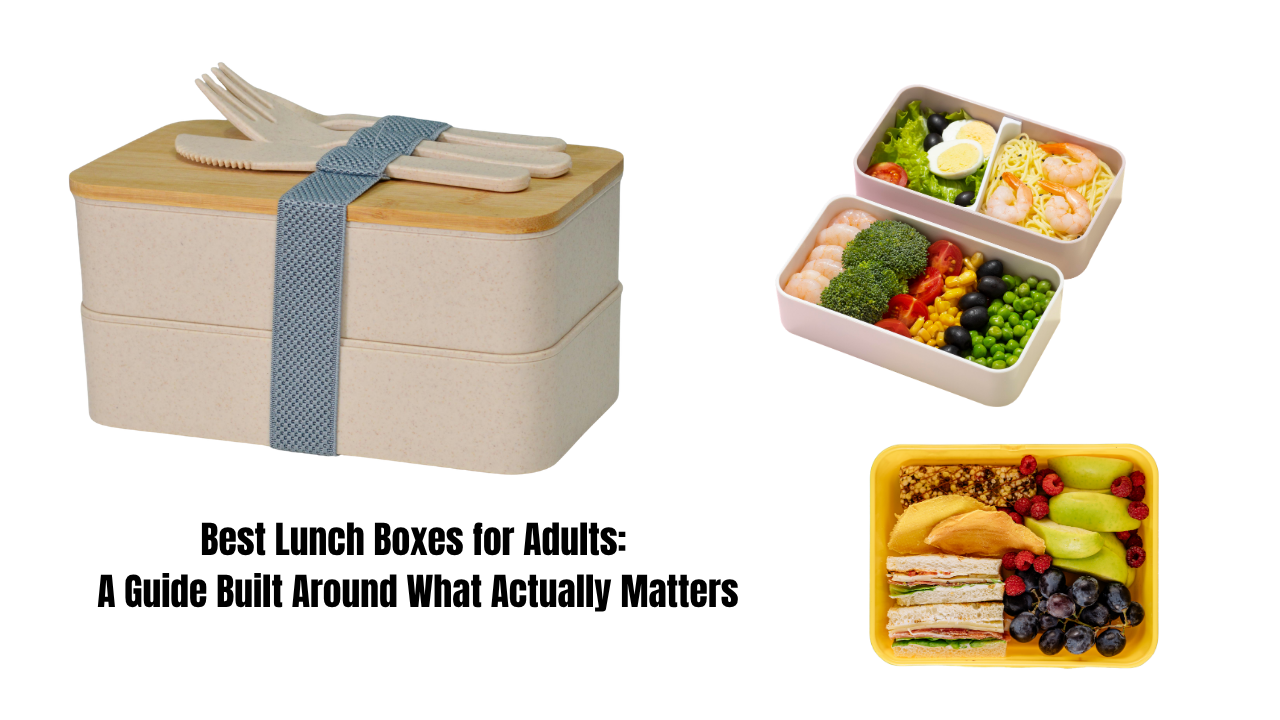
Most lunch box guides start with a list of ten products and call it a day. The more useful question is what you’re actually trying to solve — a soggy salad, a lukewarm soup that’s supposed to be hot, a bag that smells like last Tuesday’s fish no matter how many times you wash it. Once you know which problem you’re solving, picking the best lunch boxes for adults gets a lot easier.
Insulated Bags vs. Bento-Style Boxes
These are the two main categories, and they solve different problems. Insulated lunch bags — soft-sided, usually with a zipper — are built to hold temperature. A well-made one can keep food cold for close to eight hours and warm for around four, according to brand specs like Tibule’s, which matters if there’s no fridge where you’re eating or you’re commuting a long distance before lunch. Bento-style boxes, on the other hand, are rigid containers with built-in compartments, and they’re built around separation rather than temperature control. Most bento boxes on their own don’t provide meaningful insulation—the plastic or steel walls aren’t thick enough for that—but plenty of people solve this by dropping a bento box inside an insulated bag, getting both benefits at once.
If your main frustration is dressing soaking into your lettuce by the time you eat, a bento box with a divided compartment solves that directly. If your issue is food going lukewarm before lunch, insulation matters more than compartments, and a proper insulated bag or a vacuum-style container is the better fix.
Why Material Choice Actually Changes the Experience
Plastic containers are the lightest and cheapest option, but lower-quality plastic tends to stain from foods like tomato sauce or turmeric and can hold onto smells over time, even after washing. Stainless steel avoids both problems — it doesn’t stain, doesn’t retain odor, and holds up to years of daily use without cracking, which is part of why it’s become the default recommendation for anyone buying a lunch box meant to last. The tradeoff is that most stainless steel containers aren’t microwave-safe, so if reheating at your desk is part of your routine, that’s worth checking before you buy. Glass splits the difference — it’s microwave-safe and doesn’t stain or hold odors, but it’s heavier and more fragile, which matters if you’re carrying it in a bag that gets tossed around on a commute.
What to Actually Look For: Best Lunch Boxes for Adults
Leak-proof sealing is worth prioritizing over almost everything else if you’re bringing soups, sauces, or dressed salads. Boxes with a silicone gasket built into the lid seal far better than ones relying on a simple snap-close lid, and this is usually the difference between a bag that smells fine after a spill and one that needs to go through the wash. Compartment count matters based on how you actually eat — a simple two-section divide is enough if you’re just keeping a sandwich away from fruit, but a four-compartment layout makes more sense if you’re portioning out protein, carbs, and vegetables separately, which some people find helps with portion awareness without needing to measure anything.
Capacity is worth checking against your actual appetite rather than guessing. A container in the 1,400 to 1,700 milliliter range tends to fit a standard adult meal comfortably — enough for a protein, a starch, and vegetables without cramming — while smaller containers work fine for lighter lunches or if you’re packing snacks alongside a separate main container.
A Realistic Example
Picture someone who works a hybrid schedule — three days in the office, two from home — and packs lunch mainly for the in-office days. Their office has a fridge, but it’s always full by 9 a.m., so their lunch usually sits at room temperature on a shelf or in a bag under their desk for four or five hours before they eat. That’s exactly the kind of situation where insulation matters more than most people initially think. Best Lunch Boxes for Adults: What Actually Keeps Food Fresh (Not Just Cute): Keeping perishable food out of the temperature danger zone for that long without any cooling isn’t just about taste; it affects food safety too. For this person, a bento box alone — even a well-made one — isn’t solving the actual problem. An insulated bag with an ice pack pocket, or a bento box paired with one, closes that gap directly.
A Few Products Worth Knowing About
The Zojirushi Mr. Bento Stainless Lunch Jar is frequently called out as one of the strongest options specifically for keeping food at temperature over several hours, thanks to its stainless steel vacuum construction — a solid pick if hot food staying hot is the priority. The PackIt line has built a reputation on convenience features like a buckle handle for attaching to a bag or backpack, and it holds a strong average rating on Amazon from thousands of reviewers, which suggests consistent day-to-day reliability rather than a product that just photographs well. Bentgo’s stacking design — a lidded top container over a bottom one, separated by a divider that also holds utensils — is a straightforward way to get organization without needing to think about which compartment goes where. None of these are the only good options out there, but they represent the three main things people actually care about: temperature retention, everyday portability, and simple organization.
Frequently Asked Questions
Do bento boxes keep food cold on their own? Generally no. Most bento-style boxes aren’t insulated on their own — they’re built for separating food, not controlling temperature. Pairing one with an insulated bag or adding an ice pack closes that gap.
Is stainless steel or plastic better for a lunch box? Stainless steel holds up better over time and won’t stain or absorb smells, but it’s usually not microwave-safe. Plastic is lighter and often microwave-friendly, but lower-quality versions can stain and retain odors after enough use.
How long can food safely sit in a lunch box without refrigeration? As a general food safety guideline, perishable food shouldn’t sit at room temperature for more than about two hours. If you know your lunch will be out longer than that, prioritize insulation or an ice pack rather than relying on a plain container.
Are compartments actually useful, or just a gimmick? They’re genuinely useful if you regularly pack meals with sauces, dressings, or foods that get soggy when mixed — a divided container keeps those separate until you’re ready to eat. If your lunches are simple, like a single sandwich, a basic single-compartment box works just as well.