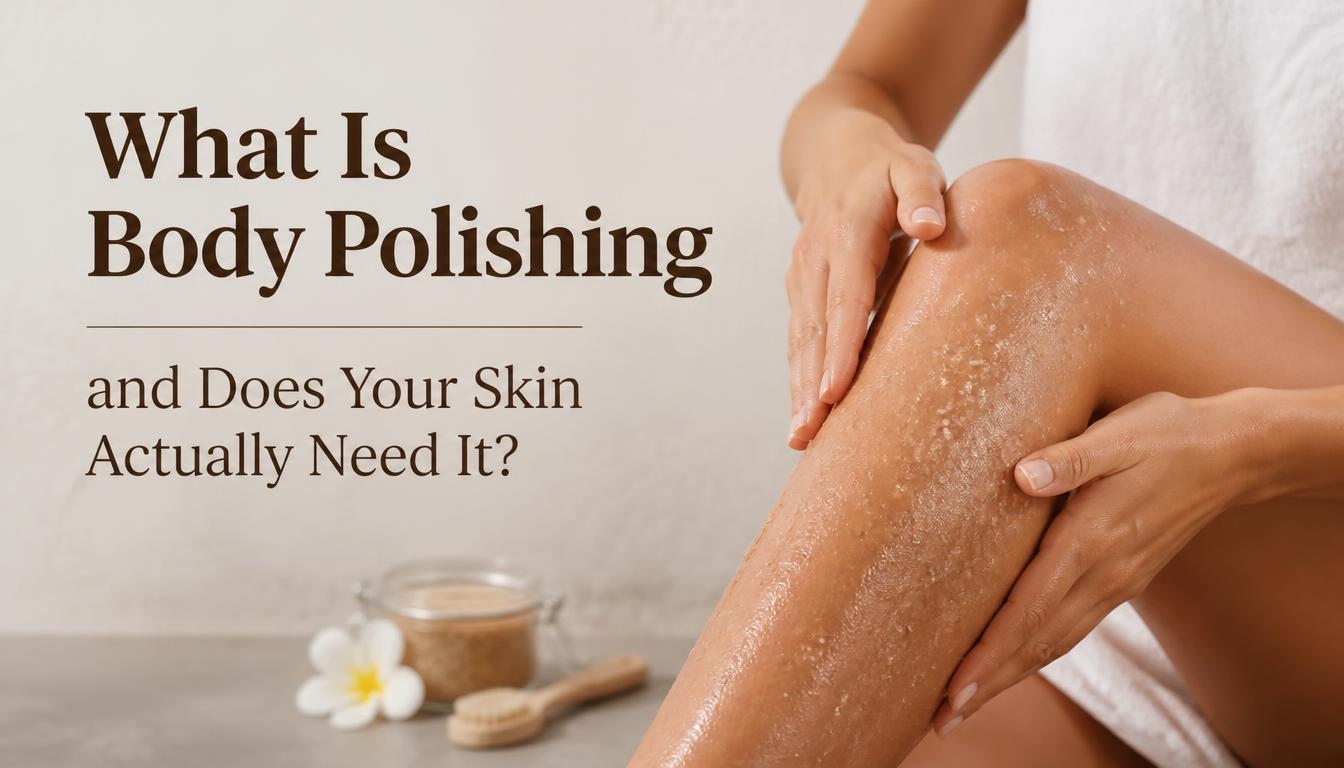
Body polishing is a full-body treatment that combines gentle exfoliation with hydration. The goal is to remove the layer of dead skin cells that builds up on the surface and leave the skin softer, smoother, and better able to absorb moisturizer.
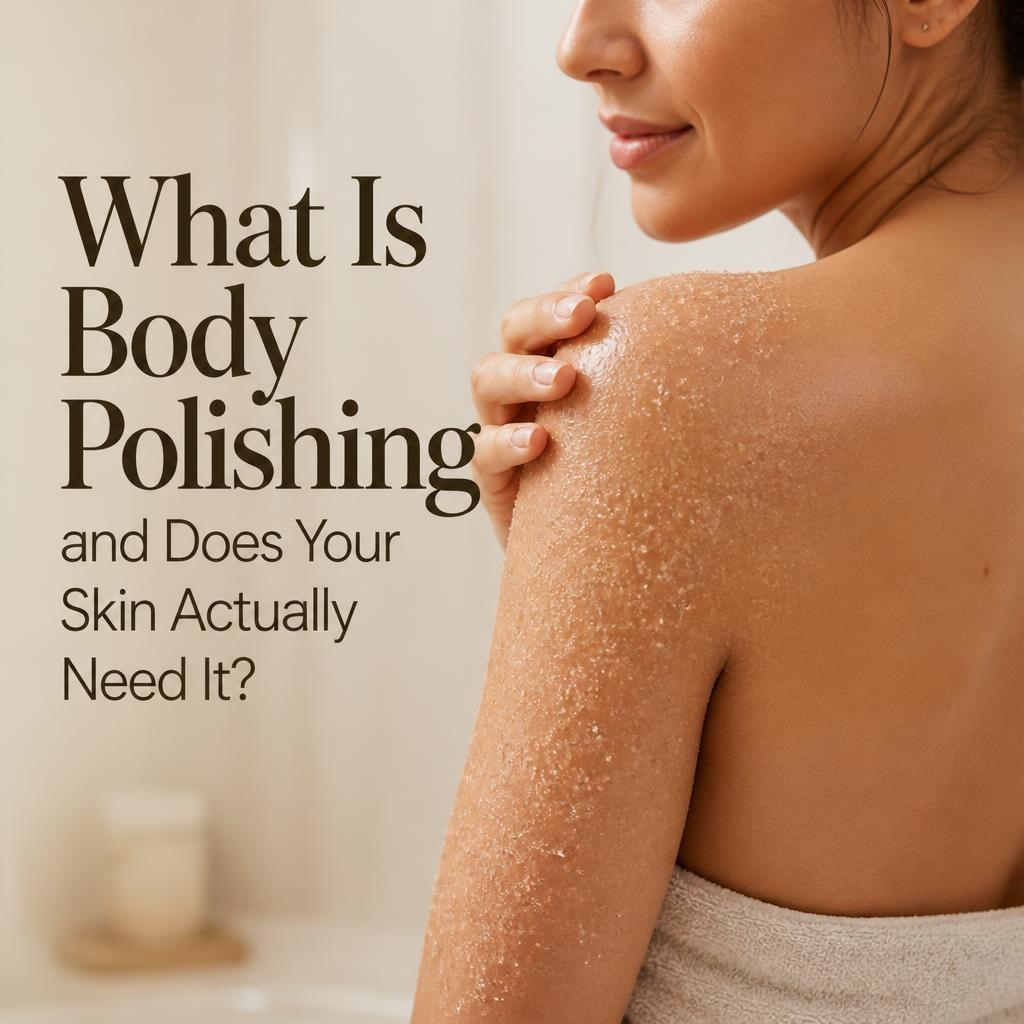
It is often described as a facial for the body. In practice, it usually involves massaging a mixture of fine abrasive particles (such as sugar, salt, or coffee grounds) suspended in oils or butters over the skin. The particles lift away dull, dry cells while the oils help condition the skin at the same time.
Many people notice an immediate difference in how their skin feels—especially on rough areas like elbows, knees, and the backs of the arms. The skin tends to look brighter because the surface is cleaner and reflects light more evenly.
Table of Contents
How Body Polishing Differs From a Regular Body Scrub
The two treatments overlap, but they are not identical. A typical body scrub focuses mainly on cleansing and scrubbing away dead skin, often with coarser particles and a foaming or gel base. Body polishing formulas are usually richer. The abrasive particles tend to be finer, and they sit in a nourishing oil or cream base rather than a detergent-heavy cleanser. The result feels less stripping and more conditioning.
In a spa setting, body polishing is sometimes part of a longer treatment that may include a light massage and a final moisturizing step. At home, the same principle applies: exfoliate gently, then seal in moisture.
Who Benefits Most
Dry, rough, or dull-looking body skin responds well. People who notice ashy patches in winter, or who have areas of keratosis pilaris (those small bumps on the upper arms), often find polishing helpful. It can also improve how well self-tanner or body lotion absorbs.
Sensitive or very reactive skin needs caution. Coarse scrubs or aggressive pressure can cause irritation. In those cases, finer particles and lighter pressure work better. Anyone with open cuts, active eczema, or sunburn should wait until the skin has healed.
A realistic example: someone whose legs feel dry and flaky after frequent shaving may notice that a weekly polish reduces roughness and makes subsequent moisturizer last longer. The difference is usually most obvious on the lower legs and elbows.
How to Do It Properly
Start with clean, slightly damp skin—ideally after a warm shower when the skin is softer. Take a small amount of polish and massage it in circular motions, paying extra attention to rough spots. Avoid the face and any broken or irritated areas. Rinse thoroughly, then apply a body oil or rich moisturizer while the skin is still slightly damp. This last step matters more than most people realize. Exfoliation removes the barrier of dead cells, so the skin is more ready to take in hydration, but it also loses moisture faster if nothing is applied afterward.
Once or twice a week is enough for most people. Daily polishing can lead to irritation or a compromised skin barrier.
Original Insight
The real value of body polishing is not dramatic transformation after one session. It is the cumulative effect of keeping the skin surface clear so that everyday moisturizers actually reach living skin cells. Many people layer rich creams on top of a buildup of dead cells and wonder why their skin still feels dry. Removing that layer first changes how the rest of the routine performs.
Frequently Asked Questions
Is body polishing the same as body scrubbing?
They are closely related. Polishing formulas are generally finer and more emollient, while many scrubs are designed more for cleansing.
Can I do body polishing at home?
Yes. Many effective polishes are available for home use, or you can make a simple version with sugar or salt mixed into a carrier oil.
How often should I polish my body?
Most skin types do well with once or twice a week. Adjust based on how your skin feels afterward.
Does it help with ingrown hairs?
Gentle exfoliation can reduce the buildup that traps hairs under the skin, which may help prevent some ingrown hairs, especially on legs and underarms.
Is it safe for sensitive skin?
It can be, if you choose fine particles, use light pressure, and avoid fragranced formulas. Patch-test first if your skin reacts easily.
Should I polish before applying self-tanner?
Yes. Clean, smooth skin accepts self-tanner more evenly and reduces the chance of patchiness.
Conclusion
Body polishing is a straightforward way to keep body skin smoother and more receptive to moisturizer. It works by removing surface buildup and pairing that step with hydration. When done gently and followed by a good moisturizer, it delivers noticeable softness without requiring complicated routines. The key is consistency and restraint—enough to clear the surface, but not so much that the skin becomes irritated.
Written by: Sofia Losan
Reviewed/Updated: 2 November 2026