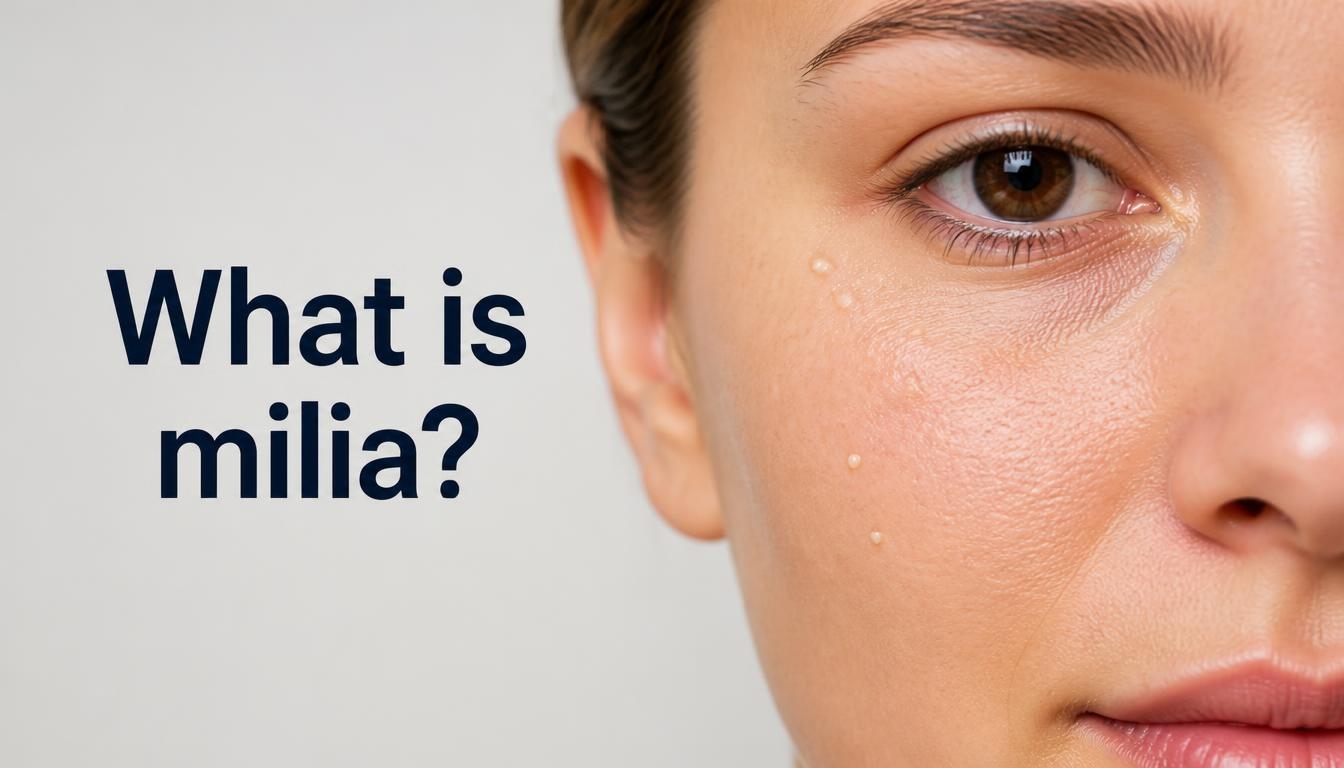
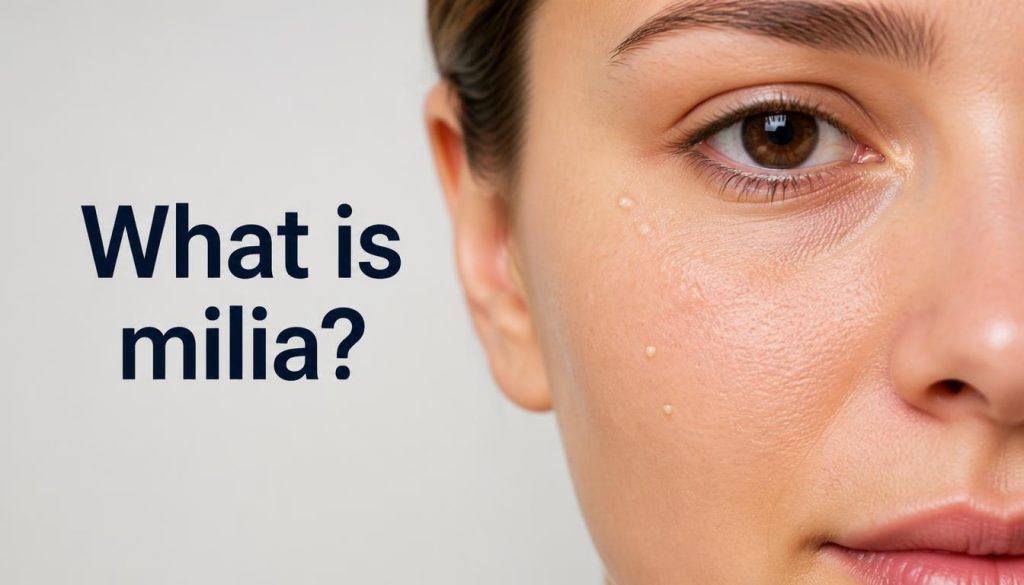
Milia are tiny, pearly white or yellowish bumps that sit just under the surface of the skin. They are small cysts filled with keratin, the same protein that makes up the outer layer of skin, hair, and nails. Most measure only 1–2 mm across and feel firm to the touch.
They commonly appear on the face—especially around the eyes, eyelids, cheeks, nose, and forehead—but can show up on other parts of the body as well. Unlike pimples, milia are not red, inflamed, or painful. They simply sit there, looking like small white beads under the skin.
Table of Contents
Why Milia Forms
Skin naturally sheds dead cells to make room for new ones. Sometimes those dead cells do not fully shed. Instead, they become trapped beneath the surface and harden into small cysts. This is the basic process behind most milia.
In newborns, milia (often called milk spots) are extremely common because a baby’s skin is still learning how to exfoliate properly. These usually clear on their own within a few weeks or months.
In older children and adults, milia can appear for different reasons. Some develop spontaneously with no clear trigger. Others form after skin has been damaged—by injury, burns, sun exposure, long-term use of steroid creams, or certain blistering skin conditions. Heavy, occlusive skincare products can also contribute in some people by interfering with normal cell turnover.
Milia vs Whiteheads
This is where many people get confused. Whiteheads are a type of acne. They form when a pore becomes clogged with oil and dead skin cells. A whitehead has a pore opening (even if it is closed over), so it can sometimes be extracted.
Milia are different. They are sealed keratin cysts with no pore opening. That is why squeezing them does nothing useful and often leads to bruising or scarring, especially around the delicate eye area. They stay the same size for weeks or months rather than coming to a head and resolving like a pimple.
A realistic example: someone notices a cluster of small white bumps under their eyes that refuse to go away with regular acne treatments. Those bumps feel hard when pressed and never change color or size. That pattern points more toward milia than whiteheads.
Can You Treat Milia at Home?
Many milia, especially those in babies, disappear without any treatment. In adults, some will also clear over time as the skin naturally turns over.
Gentle chemical exfoliation with ingredients like retinoids or certain acids may help encourage the skin to shed the trapped material more effectively. Consistent, non-irritating skincare that supports healthy cell turnover can reduce the chance of new ones forming. Heavy creams or thick oils that sit on the skin for long periods are worth reviewing if milia keep appearing.
What does not work—and can cause harm—is trying to pick, squeeze, or dig them out at home. Because there is no open pore, this usually damages the surrounding skin without removing the cyst.
When Professional Help Makes Sense
If milia are persistent, numerous, or in a noticeable area such as the eyelids, a dermatologist can remove them safely. The usual method involves carefully opening the surface of the skin with a sterile needle or fine blade and extracting the keratin contents. Other options sometimes used include light cautery or cryotherapy. These procedures are quick and typically leave little to no scarring when done properly.
Original Insight
Milia often frustrate people because they look like something that “should” be easy to fix, yet they ignore standard acne products. Understanding that they are sealed cysts rather than clogged pores changes the approach. The goal shifts from trying to unclog something to either waiting for natural turnover or having the cyst precisely opened by a professional. That distinction saves a lot of unnecessary irritation and failed home treatments.
Frequently Asked Questions
Are milia the same as whiteheads?
No. Whiteheads are clogged pores related to acne. Milia are small keratin-filled cysts with no pore opening.
Do milia go away on their own?
Many do, especially in babies. In adults they can persist for months and may need professional removal if they bother you.
Can I pop milia at home?
It is not recommended. Squeezing usually causes bruising or scarring without clearing the cyst.
What causes milia in adults?
They can form after skin trauma, long-term steroid use, sun damage, or simply when dead skin cells become trapped. Some appear without an obvious reason.
Do heavy moisturizers cause milia?
Very occlusive products can contribute in some people by slowing normal shedding of skin cells, but they are not the only factor.
Is milia contagious?
No. They cannot spread from person to person.
Conclusion
Milia are common, harmless cysts that form when keratin becomes trapped under the skin. They are easy to mistake for whiteheads, but they behave differently and need a different approach. Most resolve with time or gentle support of the skin’s natural turnover. Persistent ones can be safely removed by a professional. Knowing the difference helps avoid frustration and unnecessary skin damage.
Written by: Sofia Losan
Reviewed/Updated: November 2026