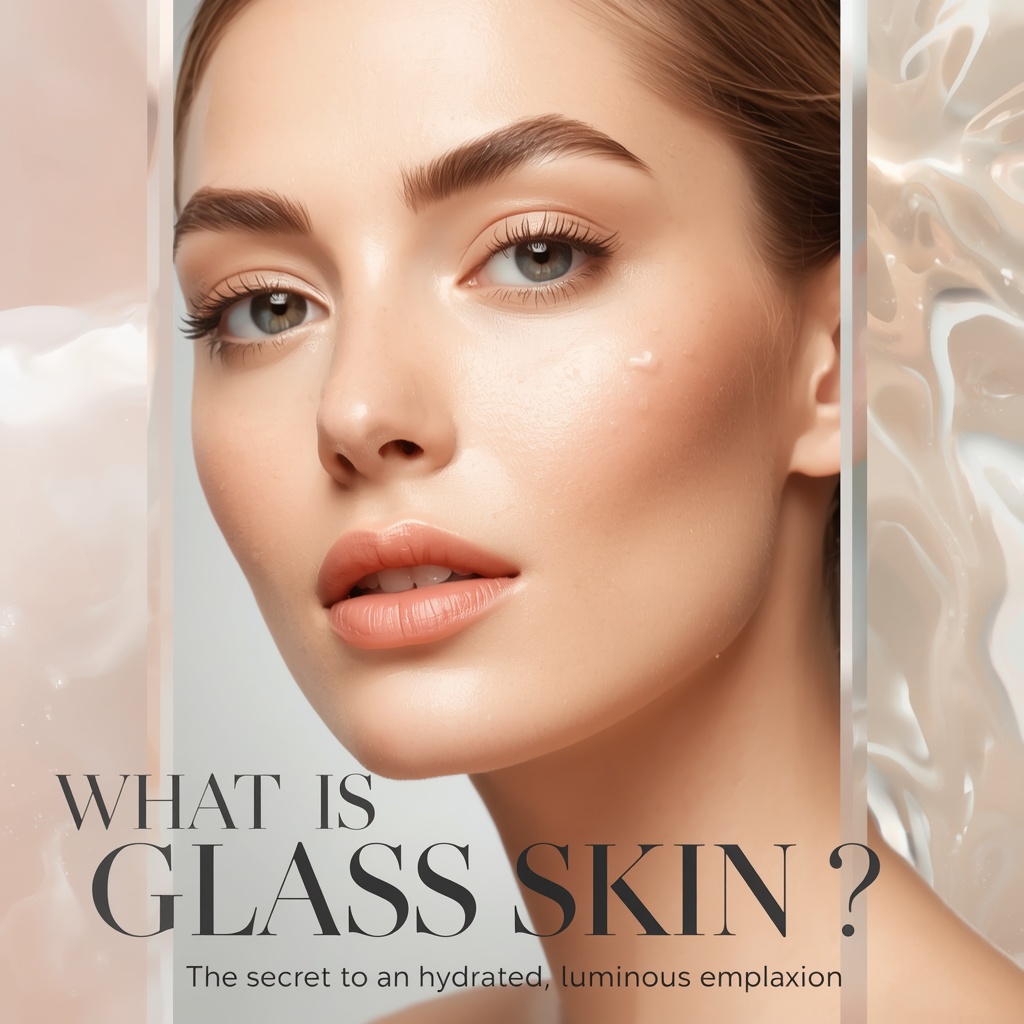
Glass skin describes a complexion that looks smooth, plump, and luminous enough to reflect light evenly—almost like a clean pane of glass. The surface appears refined, the tone looks even, and the skin has a healthy, hydrated sheen rather than a matte or heavily made-up finish.
The term comes from Korean beauty culture, where the focus has long been on skin health over heavy coverage. It gained wider attention around 2017–2018 and remains popular because the goal feels natural: skin that looks good on its own, with minimal makeup.
True glass skin is not the same as simply looking dewy. Dewiness can come from products sitting on the surface and often fades within hours. Glass skin refers to the condition of the skin itself—well-hydrated outer layers, a strong barrier, and relatively even texture and tone. When those elements are in place, light reflects more uniformly and the skin appears clearer and more radiant.
What Creates the Glass Skin Effect
Three things work together. First, adequate hydration in the top layers of skin plumps fine texture so the surface looks smoother. Second, an intact moisture barrier prevents that water from escaping quickly. Third, more even pigmentation and reduced visible roughness help the light bounce cleanly instead of scattering.
No single product delivers all of this overnight. The look develops through consistent habits that support the barrier and keep the skin well-hydrated.
A realistic example: someone with combination skin who previously used strong cleansers and skipped moisturizer might notice their cheeks looking dull and slightly rough by afternoon. After switching to a gentler cleanse, adding a hydrating essence or serum, and sealing with a light moisturizer every night for several weeks, the same skin often looks softer and more reflective under natural light—even without highlighter.
Building a Practical Routine
Most effective routines follow a simple order: cleanse thoroughly but gently, hydrate in layers, treat specific concerns if needed, lock everything in, and protect during the day.
Double cleansing helps remove sunscreen, makeup, and excess oil without stripping the skin. An oil-based first cleanse followed by a mild water-based one is common. Next comes hydration—toner, essence, or a lightweight serum containing ingredients like hyaluronic acid or glycerin applied to slightly damp skin. These draw and hold water.
A basic moisturizer or barrier-supporting cream follows to seal the hydration. In the morning, sunscreen is non-negotiable. Without daily UV protection, new pigmentation and texture issues keep appearing, which works against the even, luminous goal.
Gentle exfoliation once or twice a week can refine texture, but overdoing it damages the barrier and creates the opposite of glass skin. Strong actives such as high-strength retinoids or acids should be introduced carefully and not layered aggressively on the same nights.
Original Insight
Many people chase glass skin by adding more products, when the bigger issue is often an inconsistent or overly harsh routine. Skin that is constantly stripped or irritated cannot reflect light well, no matter how many hydrating serums you apply. Improving the barrier and keeping hydration steady usually produces better visible results than constantly rotating new “glow” products.
Layering works best when the formulas are compatible and lightweight enough not to pill. For oilier skin, thinner textures and fewer layers often look better than heavy creams. For drier skin, the opposite can be true—more occlusive elements help hold moisture longer.
Frequently Asked Questions
Is glass skin possible for every skin type?
The luminous, hydrated look is achievable for most people, but the exact products and number of steps need adjusting. Oily or acne-prone skin usually does better with lighter layers and careful exfoliation.
How long does it take to see results?
Many people notice improved softness and glow within two to four weeks of consistent hydration and barrier care. More significant changes in texture and evenness take longer.
Do I need a 10-step routine?
No. A solid core of gentle cleansing, hydration, moisturizing, and sunscreen already covers the essentials. Extra steps only help if they address specific needs without causing irritation.
Can I get glass skin with drugstore products?
Yes. The principles matter more than brand names. Look for well-formulated hydrators, a non-stripping cleanser, and reliable sunscreen.
Is glass skin the same as poreless skin?
No. Pores are a normal part of skin anatomy and cannot be erased. Glass skin refers to overall smoothness, hydration, and light reflection, not the complete absence of pores.
Should I slug for glass skin?
Occasional slugging can support barrier recovery for dry or compromised skin, but it is not required for everyone pursuing a luminous look. Overusing thick occlusives may not suit oilier skin types.
Conclusion
Glass skin is less about perfection and more about skin that is consistently well-cared for—hydrated, calm, and protected. Focus on supporting the barrier, keeping moisture levels steady, and using sunscreen daily. The luminous quality most people want tends to follow from those basics rather than from chasing every new product or trend.
Written by: Sofia Losan
Reviewed/Updated: 1 November 2026