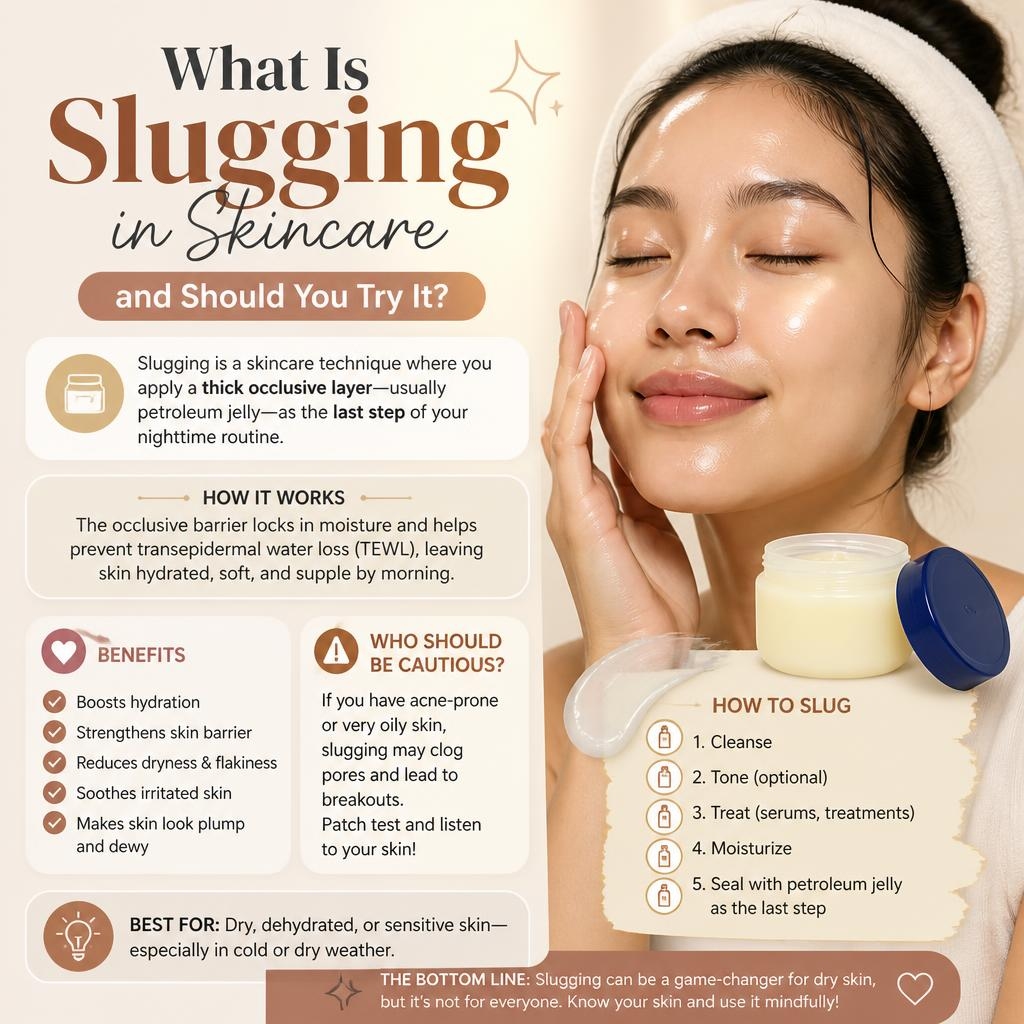
Slugging is the practice of applying a thin layer of an occlusive product—most often petroleum jelly—as the final step of your nighttime skincare routine. The goal is simple: create a physical barrier that stops moisture from escaping while you sleep.
The name comes from the shiny, slightly slick look it leaves on the skin, similar to a slug’s trail. It has nothing to do with actual slugs. The technique gained popularity through Korean skincare routines and later exploded on social media, but dermatologists have recommended occlusive layers for dry and compromised skin for decades.
Unlike a moisturizer that adds hydration, slugging mainly prevents water loss. Your skin constantly loses moisture through a process called transepidermal water loss. When the skin barrier is weakened—from cold weather, harsh cleansers, over-exfoliation, or indoor heating—that loss speeds up. An occlusive like petroleum jelly can reduce that water loss dramatically, sometimes by as much as 98–99 percent according to dermatological understanding of petrolatum.
Table of Contents
Who Benefits Most From Slugging
People with dry, dehydrated, or barrier-damaged skin usually see the clearest results. If your face feels tight after washing, develops flaky patches around the nose or cheeks, or stings when you apply products, an overnight occlusive layer can help skin recover.
It is less suitable for oily or acne-prone skin, especially if you apply it over the entire face. The thick layer can trap sebum and dead cells, which may lead to clogged pores in some people. Those with combination skin often do better by applying it only to dry areas and skipping the T-zone.
A realistic example: someone living in a cold climate with central heating might notice their cheeks becoming rough and tight by mid-winter. After adding a light layer of petroleum jelly over their usual moisturizer two or three nights a week, the tightness often improves within a few days because the moisture stays put overnight.
How to Do Slugging Correctly
Start with clean skin. Any leftover makeup, sunscreen, or dirt will get sealed in, which raises the risk of congestion. Use a gentle cleanser and avoid strong actives like retinoids or high-strength acids on the nights you plan to slug, as the occlusive can increase their intensity and potential irritation.
Apply your regular hydrating products next—something with hyaluronic acid, glycerin, or ceramides works well on slightly damp skin. Follow with a basic moisturizer. Wait a minute or two so the products settle.
Then take a pea-sized amount of petroleum jelly or a similar healing ointment. Warm it between your fingers and press a thin layer over your face. You do not need a thick coat. A light, even film is enough. Many people protect their pillowcases with an old towel or pillow cover because the product can transfer.
In the morning, cleanse as usual. Your skin should feel softer and less tight. Results are gradual rather than dramatic overnight miracles.
Common Mistakes to Avoid
Applying too much product is the most frequent error. A heavy layer feels greasy, transfers onto bedding, and offers no extra benefit. Using it every single night can also be unnecessary for many people. Two to four nights a week is often sufficient, especially during dry seasons.
Skipping the hydrating steps underneath is another issue. The occlusive only locks in what is already there. Without humectants and moisturizers below it, the benefit is limited.
Coconut oil and other potentially comedogenic oils are not ideal substitutes for petroleum jelly if you are prone to breakouts. Refined petrolatum itself is generally considered non-comedogenic because its molecules are too large to enter pores easily, but the overall routine still matters.
Original Insight Worth Considering
Slugging works best as a short-term repair tool rather than a permanent nightly habit for everyone. Think of it like putting a lid on a pot of soup—you keep the liquid from evaporating while the ingredients do their work. Once the skin barrier feels stronger and less reactive, many people can reduce frequency or stop altogether until the next dry spell or after a round of stronger treatments.
Frequently Asked Questions
Is petroleum jelly safe for the face?
Yes, highly refined cosmetic-grade petroleum jelly is widely used and generally well tolerated. It sits on the surface rather than absorbing deeply.
Can slugging cause acne?
It can in some people, especially those with oily or acne-prone skin, if the layer traps existing debris or if applied over unclean skin. Starting with spot application on dry areas reduces this risk.
How often should I slug?
Most people do well with one to three nights per week. Increase only when skin feels particularly dry or after barrier-damaging treatments.
Can I slug during the day?
It is possible but impractical. The shiny finish is usually reserved for nighttime.
What products work under the occlusive?
Hydrating serums and simple moisturizers with ceramides, glycerin, or hyaluronic acid pair well. Avoid strong acids and retinoids on slugging nights if your skin is sensitive.
Is there a better alternative to Vaseline?
Healing ointments that contain petrolatum plus additional soothing ingredients can feel more elegant, but plain petroleum jelly remains one of the most effective and affordable options.
Conclusion
Slugging is a straightforward, low-cost method for locking in moisture and supporting the skin barrier overnight. It delivers the most value for dry or compromised skin and requires careful application to avoid congestion. When done with clean skin, the right amount of product, and realistic expectations, it can make a noticeable difference in how your skin feels by morning.
Written by: Sofia Losan
Reviewed/Updated: 1 November 2026